

What Happens When AI Agents Can See Buyer Intent? 6 Marketing Use Cases.
Salesforce tells the agent who the lead or account is. SalesWings adds what they are doing, what they care about, and how their intent is changing. That gives an agent something useful to reason from before it acts.
Observe
Visits, clicks, campaign engagement, content consumption and other first-party behavior.
Interpret
Product interests, topic interests, recency, lead and account scores, buying momentum.
Decide
The agent weighs the signal against CRM context, thresholds, journeys and guardrails.
Act
Change nurture, surface content, route a lead, alert a rep, or deliberately do nothing.
Six practical marketing workflows
How first-party behavioral signals attached to Salesforce leads and accounts can guide better agent decisions.
| Situation | What SalesWings knows | Agent action | Why it matters |
|---|---|---|---|
01 A dormant lead comes back After five quiet months, a known lead returns to Product X pricing and implementation pages. | Engagement: recentInterest: Product XLead score: rising The signal is attached to the same Salesforce record marketing already knows. | The agent could remove the lead from a generic re-engagement stream, select Product X follow-up content, and escalate only if intent stays high. | React to renewed intent without waiting for another form fill. |
02 An account starts moving Three contacts from the same account engage with the same solution area over a short period. | Engagement: 3 contactsInterest: same solutionAccount score: rising Person-level behavior becomes more useful when read in the account context. | The agent could shift the account into a focused ABM motion, prioritize the relevant product story, and alert the account owner with the underlying evidence. | Pick up buying-committee movement, not just isolated clicks. |
03 A customer shows a new interest An existing customer begins researching an adjacent product or service. | CRM status: customerInterest: new productEngagement: increasing CRM context and behavior can be read together rather than as separate datasets. | The agent could move the contact into an expansion journey, adjust the next content shown, and create a sales task only once the interest is sustained. | Make cross-sell timing behavior-led instead of list-led. |
04 The next content choice is unclear A lead has moved from educational content to case studies and implementation material. | Journey: considerationInterest: known topicEngagement: sustained The agent has evidence of what has already been consumed. | Instead of following a fixed branch, the agent could choose the next useful asset or message based on the lead’s actual progression and avoid repeating material. | Nurture adapts to what the buyer has already learned. |
05 The lead is ready for a human Pricing engagement, high product interest and a strong score converge at the same time. | Engagement: pricingInterest: highLead score: sales-ready The hand-off can carry both the trigger and the context behind it. | The agent could route the lead, summarize why the moment matters, identify the topic to lead with, and create the next-best sales action. (We made a no-code AppExhange tool for this exact use case) | Sales gets context, not just another MQL notification. |
06 There is no real buying signal A lead reads one broad article and then goes quiet. | Engagement: lowInterest: unclearLead score: low Weak signals are still useful when they prevent overreaction. | The agent could leave the lead in lightweight nurture and suppress aggressive outreach until something meaningful changes. | A better agent also knows when not to act. |
Behavior arrives from more than one touchpoint.
Website, campaign, app, content and other engagement can be collected and tied back to commercial records.
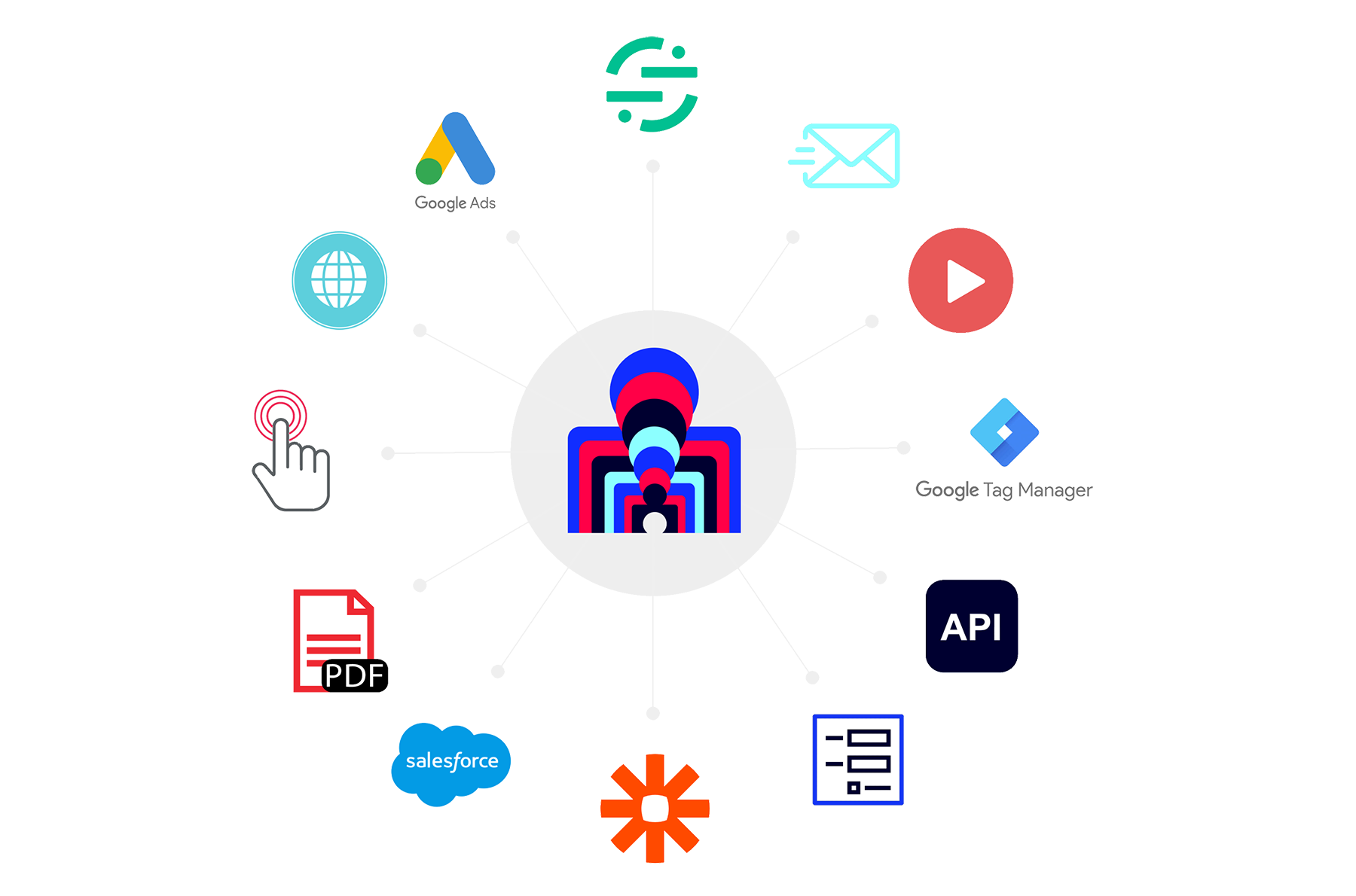
The useful part is where the insight can go next.
When intent lives in Salesforce, connected sales, marketing and agent workflows can work from the same context.

