


MarTech Expert Interview: A window to the truth with SH/FT Paradigm CEO
This article was updated on November 19, 2025 with an up-to-date FAQ section.
In this SalesWings Expert Interview with SH/FT Paradigm’s CEO, Elizabeth Ross and SalesWings Co-founder and CEO, Philip Schweizer, Liz offers invaluable insights on embracing innovation, navigating the evolving role of a CEO of innovative marketing strategy and technology consultancies, and harnessing technology as a tool for growth and decision-making. Perspective on servant leadership and significance of understanding processes alongside technology is particularly enlightening.
For over 15 years SH/FT Paradigm has implemented, optimized and operationalized omnichannel campaign strategies & execution, reporting & analytics, and go-to-market strategy playbooks. SH/FT is an official agency partner for Adobe, Salesforce and Braze. Believe this interview holds immense value for experts like yourselves, providing actionable insights into leveraging technology effectively to drive growth and make informed, data-driven decisions.
Watch or read the interview to learn more about:

About MarTech Expert Elizabeth Ross
Liz brings more than 25 years of experience leading some of the world’s most progressive and fastest-growing agencies. As a dynamic leader accustomed to navigating today’s complex world of marketing, Liz has pioneered brand-consumer relationships for clients such as General Motors, Delta, HP, General Electric, United Health Group, Michelin, Citibank, IBM, Clorox, Cox Communications, Hillshire Brands, Visa and Pepsi-Cola, to name a few.
—
Read the transcript!
Philip:
Welcome everybody. My name is Philip Schweizer. I’m a co-founder, and CEO here at SalesWings. SalesWings is a lead and account analytics platform for Salesforce and Braze. And today we have a very special guest with us. Liz Ross. Welcome Liz.
Liz:
Thank you.
Philip:
And Liz is the president and CEO of SH/FT. SH/FT is a growth and business partner for innovative organizations helping these companies transform their digital programs and navigate the daunting landscape of marketing, and how it evolves, and Liz brings 25 years of experience running and growing some of the most successful agencies out there. And she’s worked with companies like IBM, Citibank, Pepsi Cola, to really help them pioneer brand consumer relationships with strategy and technology. So welcome, Liz, to the show.
Liz:
Thank you so much. I’m thrilled to be here. And really looking forward to this conversation.
Philip:
It’s great to have you. I also know you’ve just had a very busy period SH/FT has just made an acquisition of Principle Studios so we’ll talk a little about this after. But maybe tell us a bit more about yourself, and how you came to be President and CEO at SH/FT?
Liz:
What I will tell you is that I am the daughter of an artist and a computer programmer. And that sort of unique blend, really sort of as a kid sort of that left brain, right? Brain, work. Was impactful for me. I’m an early adopter of technology. I always have been, you know, I went through college and thought I was going to be an art director. And I loved advertising. I knew I wanted to be in advertising when I was.
When I was young, I went to school, got a degree in advertising and marketing with an emphasis in graphic design and started off on the creative side of the business.
But what I realized early on was the impact of technology but also the power of presentation and good storytelling. I became the art director, who would do all the new business pitches and because it dates me a little. All the executives were scared of the computer so they would take me with them. I got to be in these incredible rooms, sort of running presentations and watching these incredible storytellers’ work.
For me, the thread through my entire career has been a sort of innovation and growth has manifested its way through roles and new business, and growth ultimately into management through a bunch of different types of agencies. So traditional agencies, Motor Media, the very first digital agency that did the very first banner on the Internet, 1994 for AT&T Wired, if you could believe it.
And you know, up through Tribal DDB, Digitas into IPG’s Media Group, really understanding sort of the implications of data on the media and inventory into a full-scale agency, independent in Minneapolis, called Periscope, that we sold in 2019, and then finally to SH/FT. So, it’s my first private equity backed company and really building a platform.
It’s been quite a long journey, one that I probably could never have predicted. But again, the theme underneath all of it is change being really excited about embracing and interested in a sort of what drives change. And then, how you help companies grow through that, or with that.
To the last part of your question about the role of a CEO, I will tell you that earlier in my career as a CEO, I really believed it was my job to put the company on my shoulders and carry it forward. What I would read articles about servant leadership was sort of thought to myself, well…what I have realized as I have gotten older is that it is my job to get things out of people’s way.
Whether that’s in servitude or in service of. What I say to the teams that SH/FT often is that when something is in your way or preventing you from being great, it is my job to get it out of your way.
I think the role has changed. Likely, the role was maybe always the same. And I’ve changed in it as I’ve gotten older. But really, that is the premise of both. Okay, let’s chart the course. But as we move through the course, my job is to make the people that work at SH/FT better and more effective.
Philip:
So, you touched on several aspects there. So obviously you’re starting as an art director. I think that’s how branding looked like at the time. Right? You had. People maybe think of Mad Man? Which a lot of people know and where they’re painting and doing those presentations. A very creative role and profession. I think that probably is also one reason how you manage today, how to envision, how technology is an enabler, then, of very personalized customer experiences.
How are you still here and more invested than ever in the Salesforce ecosystem?
Liz:
Very much so, and you know I still love things that are very tactile. I will tell you before I had kids, one of my favorite hobbies was bookmaking, and just the idea of something that you can touch. But I think that is humans and you look at where we are today, and you look at what’s coming. And frankly, already here in many so standpoints with AI. Our opportunity as marketers, as technologists, is to help companies grow and use technology as a window through.
There’s still another human that’s on the other end of the process. And I think that again is how I’ve always thought about it, that there’s a person. Our job is to connect people with other people who have goods and services for that exchange.
Philip:
Absolutely. And we’ll talk a little about technologies as well after. So of course, technologies are tools. Like an artist, an artist can have a great pen. But that doesn’t mean that the image afterwards coming out of it is going to be, it’s going to be beautiful. But let’s take just a moment talking about SH/FT.
SH/FT on a higher-level position as a business and a growth partner. But what’s behind that? Tell us a little of DNA off SH/FT, a leading role, right? Everybody in the organization looks up to you, your captain, or the steering of the boat.

So how does SH/FT differentiate from some of the other consultancies out there?
Liz:
The DNA of SH/FT is five different companies that were all brought together prior to my arrival. They were a mix. It was a company called Lead MD. Which was out of Arizona, which was focused on sort of lead generation, and really on the back of Marketo implementations. But a proper sort of digital transformation, heavily focused on that mid-market and the other sort of anchor acquisition, was a company called Trendline Interactive. Which had really been built on the back of SFMC and the implementation and creation of a sort of these giant email engines, if you will, really personalized messaging.
When I joined it was, everybody was sort of coming together like any good acquisition process. It was very complex and there were a lot of conversations about it. Are we a consulting firm or are we an agency?
That is a false narrative. It’s a false narrative on the client side. I don’t think any client cares. I don’t think they care. I think they’re looking for it. What at the end of the day are you providing for me? What services are you providing for me that I can’t acquire or manage in-house or that, you know? Ultimately, I need outside expertise to deliver.
But internally, the push and pull of consulting versus agency was again based on outdated ideas on all sides. When we really started to bring this brand together, ultimately, what was a different kind of company?
What we anchored in was this premise of that. What our job is to do is to drive growth. That we are a business and growth partner for our clients. It gets us out of a false conversation or narrative, that isn’t all. That is helpful and only sort of serves to drive internal, internal friction, if you will, that feels less necessary.
Philip:
You mentioned before, how you see your role as a CEO as it relates to your teams and leadership in the business. Would you say that with customers it’s somewhat similar. So, you have customers that come to you and they have certain challenges. They’re trying to find the right approach to achieve that growth. Or they’re trying to fix a challenge.
What role do you see as a consultancy or an agency playing on behalf of the customer?
Liz:
I’ve obviously spent a lot of time thinking about this. I think that the most important value that we can bring to a company is that we can see across a lot of different companies. So, when you work inside of an industry. So, say you’re in insurance.
You become very myopic, and you become myopic to your category, but especially with the intricacies of your own company and your own operation.
The value that an external partner provides is that we can say, ‘this thing is happening in CPG’, or ‘this thing is happening in software tech’. But it’s going to apply for you. And you should think about it here as an accelerant. But that sort of ability to see more broadly can only come from the outside.
I remember early in my career we’d be in a new business meeting or a sales meeting, embodying on our team would say, oh, I am just so passionate about the clients’ business, right? I’m so passionate about insurance. And I would always say, ‘you aren’t passionate about that business, or you would have worked there’. You’re passionate about ours, and you’re passionate about how our scan drives their business forward.
That separation, I think, has long been a sort of Achilles heel of agencies or consultancies that aren’t clear on what their business is and that sort of chameleon nature of we disappear into your company, I think, is what is going away.
And sort of finding partners that bring different perspectives, bring different points of view, bring different ideas that are born out of seeing horizontally.
How we operate for our clients is how I operate for our business. I’ve worked at lots of different companies. So, I have different pattern recognition. I’ve seen lots of these things before. I can apply it to our business. And that’s exactly what I look for in our teams.
Horizontally. Really passionate about what our business can do for somebody else’s. Not that we’re passionate about theirs.
Philip:
That’s an interesting point of view. So, when you look at your team and how you organize these teams and how you build a team that’s going to be engaging with the customer,
does that also translate into not having industry vertical focus teams. Do you consciously put your teams on different projects?
How do you organize your teams across different customers?
Liz:
Yeah, it’s always a mix, right? And there’s always a push pull. Because when you’re in a competitive situation at some level, the client wants to know that you’re not going to spend the first 6 months sort of learning their business, which is 100% fair. But at the same time, to be an effective accelerant, you have to have a different perspective, which means you have to be able to have thought about it and seen it in other places.
So, when we’re building teams, ultimately, you’re looking for a mix, right? So, if you have somebody that’s worked in an adjacent industry, or can sort of accelerate that team’s knowledge base, because every industry has its own language. We’re very clear on our value. Our recommendations of what we’re building are less important than being an expert in their business. They’re already experts. But what we need to do is apply it to their expertise.
Philip:
It also reminds me a little about how customers look at SalesWings. Our company, when they are looking for a partner around their sales and marketing alignment initiatives or general account analytics, or whatever it is. There comes often that question, who do you work with in our industry?
SalesWings is industry agnostic. We solve general or global challenges that marketing and sales teams face around marketing operations and data and account analytics and all these things. We have in many industries, you know, experience and used cases we may not have, you know, one within your industry, with the exact same size and exact same problem. But it is a clear strength that you see how other industries which may be more innovative or to solve the same problem. To bring this in and I think that makes sense. That’s how the market needs to think right.
It is an advantage. So, think about it. And maybe that’s going to lead us to your partner firms such as Salesforce and Adobe embrace. If you look at Salesforce’s marketing and how they’ve pioneered marketing. It’s out of this world. Its experience driven. And I remember the first time I went to Dreamforce. I thought, well, this is not. This cannot be a B2B software conference, right?
There’s like, I don’t know some avatar running around, and there’s like a Hawaiian band playing over there. But it was the best software conference that I had ever been to, and you could not do that if you would have just software marketers in their corner doing that, right?
Liz:
That’s right. And those moments of reinvention are, you know, if you think Dreamforce really pioneered it. But they really picked up from CES. They picked up from sort of some of these big experiential moments, concert tours and things that just sort of brought you in along that path. So, it’s a great example. And Adobe Summit is this week again, and has some of those same markers. You really, see? The marketing done well is informed by other things.
Philip:
Well, I think, if you will be going to the annual Braze event, I believe that’s also going to be in Vegas.
I believe that’s the case. Right? So maybe we’ll meet up there. But yeah, so you’re partnering. SH/FT is partnering with Salesforce, Adobe, and Braze.
Technology is a window to the truth? Can you elaborate a bit on this statement? It’s the window to the truth.
Liz:
For sure. So, this is foundational, I think, for all of us going forward. And there was an interview with the CEO of Nvidia, where he kind of echoed this, which then leads me to believe it must be true.
But if you think of how technology has been sold for arguably the last 20 years, it has been sold as a solution. It is the solution. And you know it is not only that everyone. Everyone has been told they’re one system away, one implementation away from Shangri-La, right? This place, that everything’s going to be perfect.
The truth again if you go back to me we’re talking to humans is that when applied correctly, what technology is a window to the truth. When I talk about what SH/FTs value proposition is to clients, what I tell them is, we are an anecdote killer. Anecdotes permeate every company in the world, even Salesforce. When we do this, a Dreamforce. This happens, right?
There are a million conversations in every office building around the world. When we do this promotion, when we have this kind of event when we publish this newsletter this happens.
The magic of technology is, maybe. But we can tell you if it’s true or not. So, it can strip away the anecdotal power of for example, a sales team saying marketing doesn’t matter.
All that matters is when my sales team is on the ground and has these meetings. This happens okay. Maybe so. The window to the truth gives any company and any role inside of that company, whether it’s the CIO, the CMO, the Chief Sales Officer, the complete picture of what are the facts. Then they can decision based on those facts, and that those sources of truth in a way that accelerates them very, very quickly.
Because anecdotes are often shades of the truth. And there are reasons why they’re in there. Technology give you the answers for what gets tweaked or adjusted, or double down on to then tell you how to grow.
How to grow, and that is the real power of tech. It’s a window to the truth.
Philip:
Where do companies get it wrong, right? You have it on your website, too. So, you’re stating Gartner, 33% of capabilities and tools are used within these organizations.
I feel sometimes executives feel like technology is that magic thing. It’s going to change. Everything like you’ve said before. But there’s people that are going to be running these technologies.
They need to be ready for that. They need to buy into the vision. They need to be able to work with it and understand it. And I see certain technological trends that are problematic.
You have technologies that are taking technology away from certain business teams, and then they give it to maybe a data team, or, you know, kind of more the CTO’s team or the CIO’s team or something.
But generally, there’s a lot of power in it. But where?
Where do companies get it wrong? What’s your insight there?
Liz:
First and foremost, is not understanding process coupled with technology. We’re just going to implement this technology that is divorced from or not acknowledging what are the processes that are running on top?
So that’s probably the biggest disconnect that we see right is. And again, the Gartner study shows that of technology that companies have bought. You know, 30% of the features are being used.
It goes back to the old days. One of my favorite little nuggets was that sprint could tell whether you are going to change your cell phone carrier based on how many features you use. If you never set up your voicemail.
We’re going to stay with them. Tech has many of those similar markers. What you are using, how you are using it, must be built into the processes, not the other way around.
I think that’s where companies really get it wrong. And I think the secondary sort of and maybe as problematic is that the data infrastructure that is sitting underneath companies is almost universally poor.
There are lots of reasons for it. It’s not There are very few companies that say, yes, I have clean data files. I’ve got it structured so that I can just apply an AI layer on top of it, and everything’s going to be great.
You sort of have these dueling features where you have a human process element that’s been sort of perhaps overlooked. And then you have a sort of debt in the data structure so that you don’t have a good foundation upon which to build. I think that’s largely where companies get it wrong.
The good news is that with AI, with what’s sort of happening in the know, LLMs is that much of that can get corrected relatively quickly on this infrastructure side. You’re still going to need people and process again. It will look different from it has historically. And what I loved was what the CEO of Nvidia said, ‘you’re probably thinking you should be training your kids to be computer scientists. You shouldn’t. You should be training them in domain expertise because the software is going to be created by software.’
So, I think that’s profound. And companies have a real opportunity to move quickly through the application of smart MarTech. But most companies don’t have a good sense of where they are now.
They don’t have a good read on what drives the growth of their business. They need our SH/FT Tech Navigator, but they need that map. They need that anchor source of truth. Here’s what we all work off, and that’s where I believe we are differentiated ourselves from other consultancies back to one of your earlier questions.
That will come in and show you the map. And then ultimately if you want to build that out with your internal teams, you want to build it with Salesforce or Adobe.
Great. Our job isn’t to make you dependent on us. Our job is to show you and build you a map and then collectively help your business grow.
Philip:
We see this as well hindering successful technological implementations. So not talking about us. But in general, specifically, if you think about CDP, which maybe aims to fix some of those data issues. But not only. I think the challenge for organizations is also, are we ready or not to go a step further? On then on one hand, probably never fully ready. And I think that’s what happened before the pandemic. You had a lot of companies holding off. They were like, okay, let’s first fix this, and then we’re going to fix that and then pay off that.
Let’s call it the technological pandemic. Everybody started to buy everything and they’re like, okay. Now, we’re like in the thing. And we’re going to have to work with what we have on. So, it’s difficult, right? And I think you know you are a great example of an executive and a professional that was maybe also given that technical affinity by, I think your father, or your mother, and you had the creativity that grew up with that. But sometimes I feel I have a deep understanding of tech. And how to use light is, some people maybe have it. Some others maybe have it less or don’t. Would you agree with that?
Liz:
One hundred percent. I think the fact I was meeting with our Hr. Team this morning, and we were talking about training right. How do you help people sort of clear these hurdles?
And you know I’m a big, big believer in you. Just get in and start playing around you. Experiment. I mean back again as a kid. It was my dad. It was the computer programmer. And what he said was, you should not play video games until you understand how they’re constructed.
Learning the basic sort of it, then commands and I am by no means a technologist, right? And I would be horrified if I suggested that I was. I think that it is. It is the openness and willingness to experiment and try to see that really guides that growth trajectory, and I tell the story often that I lived in San Francisco in 2002. I lived there for about 10 years, but in 2002 a social network launched called Friendster was terribly right. It was the weirdest thing we tried, we thought, silly dismissed, right? That’s done. We don’t have to think about that.
You’ve got Facebook launches in 2005, 2006, 2007. It’s getting more commercialized. I’m working with Clorox at the time, and we should be addressing this with a strategy. But that gap was five year’s right. 5 years from this is dumb to like. We must really get our arms around this today. If you tried. Chat Gpt.3.5 thirty days ago and thought that it was silly.
You don’t have five years. You have probably thirty days. When you’re going to cycle through it again, and it’s changed.
I think, for all of us, are we ready? Are we not? Am I ready? Am I not? Or anybody who’s like I’m hoping to hang on and just retire before this is a thing unless you are planning on retiring like this afternoon.
It’s a thing. It means being open and willing too, you know; I love TikTok. I find myself on all the platforms trying to understand how things are constructed. It’s the most important thing.
Philip:
It’s daunting right? They came so fast nobody really saw it coming, so maybe. It feels like it’s everything, it’s taking everything over right.
A lot of executives feel these days? They see opportunity everywhere. They don’t know where to start. They’re super worried. They’re going to be left behind. And as you said, it’s moving very, very fast, so you have this actionable AI program.
I found it very interesting and very clever. The focus and the headline are kind of build and launch your AI program or pilot. Sorry AI pilot program. I think that’s a great approach. I don’t think it is something where you can just plan it.
Look at the tools out there and then go for one and choose it and go with it. But you must sort of jump in the water, touch everything, and then kind of, see? Where is the first opportunity? Where’s it going?
Liz:
100%. That can be the main takeaway. The right is gotten in the water. Get in the water like it is, and that is that sort of for me or for anybody listening. Creativity comes from being in the water. And you’re going to see a million things that don’t work or that are irrelevant or can be dismissed.
Creativity is also born out of optimism. Which is, I know we can assemble these things or make something out of all of this. That is better than what we are doing today and optimism, and that openness and creativity is ultimately what leads to growth.
Philip:
So, you recently acquired Principle Studios. Very strong expertise in UX UI, and then engineering, right?
Why not hire a huge team of prompt engineers instead?
Liz:
Yeah, it’s fascinating. I think that prompt engineering as a thing is probably a little further out than we would all expect. And I think that if you go back to even our conversation about Dreamforce, or you go back to sort of experience the understanding and being able to map a consumer customer’s experience.
That discipline of designing UI and UX and mapping technology to it is more needed now than ever because you’ll see the AI designed things that are going to be crazy, right? And again, in the water, there’ll be many of them that work. But the pattern of recognition.
The ability to understand how to build an experience regardless of the platform will always be more valuable than just playing it around and trying to build it from prompts.
I really believe in the Principle team and expertise. That it is directly applicable to currently what is in front of us right now, but also equally important, if not more important. What is next?
Philip:
I’m wondering, I mean AI it, brings us a lot of on the one hand, it we’re wondering right to what extent this is going to nurture, creativity, or taking creativity away from people.
But I see, after all, an exciting thing happening as well. It also kind of yeah, brings some of the creativity back. Because if you think about it, think about websites.
So, the worst website I’ve built back home was with Dreamweaver. HTML! Stuff, right? I was super excited. They got the first page out, and then, you know, boxes were aligned and things like this.
Few years later, it was WordPress. Now, it’s even a lot easier. And now you have stuff like Webflow or now, come these AI website builders. I haven’t found a great one yet if you know and let me know.
Still it. It sort of makes the result kind of more accessible. Still, you’re going to interact with AI, right? So, let’s say you, you make it. You make it prompt. Okay, to this image, and it does something you haven’t expected. I cannot take it like this.
So, I think it’s exciting as it relates to campaign strategy and omni-channel strategy. We’ll see, right? I think a lot of the experience you’ve mentioned, and the know-how is going to be critical. And we’ve talked about the risk for younger generations. Now, maybe it’s too easy, right? It’s too easy. Are you going to really understand? And what you’re doing.
Liz:
Not to reference back to the Nvidia CEO. But he has a great quote that I will do no justice to, but I would recommend everybody to listen. Go read, which is about the importance of struggle. I think that the risk for us with AI is not the removal of creativity? What is the? As everything becomes easier, everything becomes more perfect. Where do we find evidence of humanity?
Much of the human condition is born out of struggle. Is born out of mistakes, is born out of you know, saying the wrong thing or not having all the facts. I think that is you know for us as a species not to take it too philosophical. But it’s where sort of our opportunity is, and essentially where I believe the risk is.
Philip:
I think the only constant is change. So again, success will be Darwin’s principle. How can we adjust to that I wanted to ask you as well? So, we’re sort of approaching the end of the end of time.
You’ve come a long way in your career, and a lot of people look up to you, know successful professionals like you who’ve made it.
If you could go back in time, meet the young Liz Ross. What advice would you give her? And maybe what advice would you give to me? You know people watching this show, with some tips and insights.
What are the things you wish you would have known 10 years ago?
Liz:
I have two; I think good ones. And I’ve thought a lot about this. I think as you get to certain stages in your career. And one of the little secrets is you never feel you’ve made it.
It’s always sort of there’s always more to do. But I think the most important sort of lesson I could impart to my younger self or to anyone listening is that you cannot make a mistake. You cannot. There are no mistakes.
If you are faced with a choice of two different jobs or two different job offers, or should I stay at my current job, or should I leave, or whatever choice you make, is it going to lead you to the next thing?
So, you should never, if you go and do something and it’s terrible and they dislike you, and you dislike them and you find yourself fired.
It’s not a mistake. It’s just taking you to the next thing. There should be no analysis paralysis. The more that you can avoid playing they would have could have should have played the game. Because that’s impossible.
Face forward, face forward, and you cannot make a mistake.
Philip:
Yeah, that’s a great thought. And it’s a great final thought. I think we can end with this one. It was a great conversation, Liz. I really, really enjoyed it as well. And hope we’ll do this again in the future. I think we should do it again in a year.
Liz:
I love it, and if nothing else we can certainly connect at the Braze Conference and have some drinks in Vegas and talk about all the mistakes we did not make.
Philip:
We all make them. Thanks a lot, Liz, and thanks as well to the audience here. I wish everybody a great rest of your day. Thanks, Liz, and have a good one.
Liz:
Thank you so much.
Interview Summary
MarTech Expert Liz Ross reflects on her upbringing as the daughter of an artist and a computer programmer, which instilled in her a unique blend of creativity and technological aptitude. She pursued a career in advertising and marketing, leveraging her early adoption of technology and passion for storytelling. Throughout her career journey, she embraced innovation and growth, transitioning through various roles in different agencies and ultimately becoming the CEO of SH/FT. Ross reflects on the evolving role of a CEO, emphasizing servant leadership and the importance of removing obstacles for her team. Additionally, she discusses the transformative power of technology as a window to truth, enabling companies to make data-driven decisions and drive growth. She highlights the significance of understanding processes coupled with technology, and the need for clean data infrastructure. Despite advancements in AI, she stresses the enduring value of human creativity and the importance of embracing change and experimentation for personal and professional growth. She concludes by imparting the lesson that there are no mistakes in career decisions, only opportunities for growth and learning.
Frequently Asked Questions
- Martech adoption: where should I start?
- How do I measure success?
- What blocks true usage?
- How do I fix data?
- Who should own operations?
- Should we centralize or federate?
- What pilots prove value fast?
- Hw do I upskill teams?
- How do I bust myths around marketing visibility?
Martech adoption: where should I start?
Start by mapping business outcomes to customer journeys, then align people, process, data, and platforms against those outcomes before touching tools, ensuring every capability traces to a measurable objective.
Build a simple capability map: audiences, moments, messages, channels, and required data. Prioritize two or three journeys with revenue impact, and document current versus target processes. Select only the minimum tech needed to execute, and define owners across marketing operations, analytics, and IT. Using a flexible, easy-to-implement solution like SalesWings’ Interactions is a great place to start for simple web-based campaigns tailored to your visitors’ behavior. Finally, create a 90-day roadmap with clear exit criteria for each step.
Tip: Use a living “north star” dashboard to keep priorities visible.
How do I measure success?
Define layered metrics: product adoption (feature usage), operational health (cycle time, error rates), and commercial outcomes (pipeline, revenue, retention), then instrument each layer so leading indicators precede lagging financial impact.
Track active users by role, key workflow completion, and data freshness. For marketing operations, monitor SLA adherence for campaign builds, QA defects, and segment readiness. This can be followed by tying programs to attributable pipeline and incremental conversion lift, not just volume. Set quarterly targets and review against benchmarks to refine processes or training rather than swapping platforms prematurely.
Tip: Publish a single scorecard that rolls up to the C-suite and is reviewed monthly.
What blocks true usage?
The biggest blockers are process-tool mismatch, unclear ownership, poor data foundations, and myth-driven decisions that override evidence from experiments, instrumentation, and cross-functional retrospectives.
Many teams implement features without defining the operating routine around them—brief templates, QA checklists, and SLAs. Governance gaps create duplicate segments, conflicting automations, and brittle handoffs. Data quality issues (missing IDs, inconsistent consent, or enrichment drift) undercut personalization and reporting. Finally, anecdotes become “policy,” slowing experimentation. Fixing these demands service design first, then capability enablement.
Tip: Run a quarterly “adoption audit” to retire unused features and reinvest enablement time where it moves KPIs.
How do I fix data?
Treat data as a product: define owners, service levels, and acceptance criteria for identity resolution, consent, and schema, then iterate with use-case-driven backlogs tied to revenue moments.
Start with an entity map (accounts, people, opportunities, subscriptions), consolidate identifiers, and establish golden sources. You can then create lightweight contracts for events and attributes, version schemas, and validate in CI before deployment. For marketing operations, publish segment definitions and freshness targets. Instrument lineage so marketers trust the numbers. Ideally, you’re aiming for “fit for purpose,” not theoretical purity; optimize data quality where it unlocks activation and measurement.
Tip: Stand up a small analytics layer that exposes trustworthy engagement and buying signals. See how SalesWings surfaces account intent.
Who should own operations?
Marketing operations should own day-to-day orchestration and standards, while collaborating with IT on security and data and with analytics on measurement, under a shared performance charter.
Define a RACI: ops owns campaign build, journey logic, and platform hygiene; IT owns access, integration runtime, and compliance; analytics owns experimentation design and attribution. Create a weekly triad forum to resolve priorities and a quarterly roadmap gated by capacity. Document playbooks and automate repetitive steps to preserve engineering time for scalable improvements instead of tickets.
Tip: Budget for enablement as a fixed percentage of program spend to keep skills and documentation current.
Should we centralize or federate?
Use a hybrid: centralize core platforms, standards, data products, and governance; federate campaign execution and experimentation close to the business with guardrails, templates, and shared component libraries.
Central teams manage identity, consent, taxonomy, and integrations to reduce risk and duplication. Business units get controlled autonomy via reusable journey blueprints, approved audiences, and QA checklists. Measure both global efficiency and local outcomes to tune the model. Start centralized, then progressively federate as maturity grows and controls are demonstrably effective.
Tip: Introduce a “change advisory light” process so speed isn’t traded for safety.
What pilots prove value fast?
Choose narrow, high-signal pilots: lifecycle trigger fixes, sales-assisted hand-raisers, or account-based reactivation journeys where clean data exists and commercial impact can be measured within one or two cycles.
For example, rebuild onboarding with progressive profiling and product usage triggers, or route in-market accounts to sales with timely context. Keep scope to a single segment, one channel, and one primary KPI like activation rate or opportunity creation. Declare success criteria upfront, then templatize the pattern for scale across adjacent segments.
Tip: Time-box pilots to 6-8 weeks and require a one-page “playbook” as the exit artifact.
How do I upskill teams?
Build role-based curricula for marketers, operations, and analysts that combine sandbox practice, badging, pair builds, and quarterly certifications tied to career paths and compensation incentives.
Start with core competencies: journey design, experimentation, data contracts, and QA. Use “learn-by-shipping” sprints where pairs deliver small improvements under supervision, then rotate roles to grow empathy across marketing operations and analytics. Maintain an internal pattern library with approved components and examples. Track skill adoption like product usage (logins, features used, and completion of labs) so enablement adjusts to reality.
Tip: Protect four hours per person, per sprint, for structured learning to prevent skills debt.
How do I bust myths around marketing visibility?
Replace anecdotes with experiments: define the claim, agree on success measures, run an A/B or holdout, and publish results in a shared dashboard so decisions outlive opinions and calendar cycles.
Common myths (“email is dead,” “events always win,” or “only sales converts”) fade when instrumented. Design tests that isolate variables, include negative tests, and require a pre-registered analysis plan. Close the loop with working agreements that codify changes when results are conclusive. Make myth-busting a quarterly ritual so culture shifts from opinion to evidence.
Tip: Nominate a rotating “myth owner” to steward each test and share the readout at the executive meeting.
Resource Links:
https://www.shiftparadigm.com/
https://www.linkedin.com/company/shiftparadigm/
#CMOgrowth #CMOinsights #growthmarketing #SHIFTTechNavigator
Author Bio
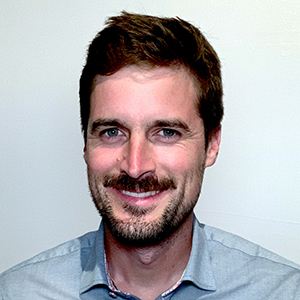 Philip Schweizer, SalesWings CEO and Head of Product. Philip Schweizer is a co-founder at SalesWings, a leading martech platform to optimize revenue operations at every step of the funnel through buyer insights. His experience encompasses designing and building marketing and sales technology stacks and operational processes, helping leading marketing and sales operations teams gain efficiency and outcomes around the processes that are at the very core of their day-to-day revenue operations.
