

First-Party Cookies for B2B Lead Tracking: What Marketing Ops Needs to Know
Despite their bad reputation, cookies remain essential to how websites and digital marketing work. Without them, web experiences would be tedious, and in many cases impossible. For B2B teams specifically, the type of cookie behind your lead tracking determines whether that data survives browser privacy changes or quietly breaks.
Not all cookies are alike, and the distinction matters more for B2B than most guides let on: your lead scoring, attribution, and account-based marketing all depend on tracking that keeps working as browsers restrict third-party data.
What Cookies Actually Do
Cookies are small identifiers that websites place on a visitor’s browser to identify, support, and understand that visitor for a set of purposes. Picture it like a small text file the browser holds onto.
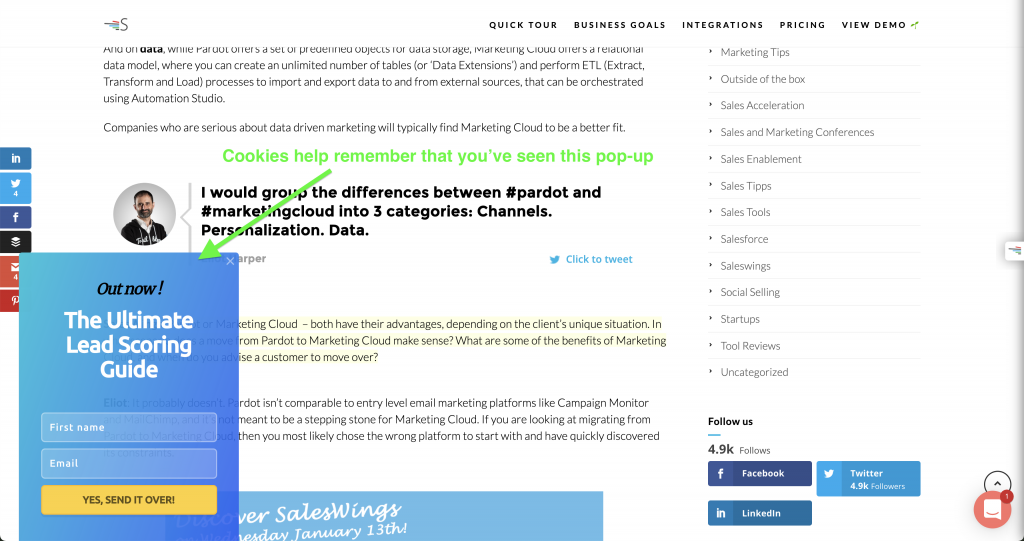
A common example: a website shows a pop-up to a visitor, and a cookie helps the site remember that the visitor already saw it, so it doesn’t show again. Cookies also remember choices and preferences, like a language setting, or consent decisions around trackers and analytics tools such as Google Analytics.
Cookies get an unfair reputation as purely invasive, but they’re also what lets companies tailor an experience to what a visitor actually wants. Turn on private browsing for a week and you’ll accept the same cookie banner on Google Search every single time, that’s the tradeoff without them.
Third-Party Cookies
Third-party cookies are placed on a visitor’s browser by a service other than the website they’re on, most prominently advertisers like Facebook or Google. They track an anonymous visitor across different websites to build an interest profile. If a site you visit carries the Facebook tracking pixel, Facebook can show you related ads on other sites in its network, that’s a third-party cookie at work.
For more detail on this part of the topic, see Marketing and Sales Teams Can Work More Data Driven.
They’re called “third-party” because a party other than the site you’re on, i.e. Facebook, can read the cookie across different domains to deliver that value. This cross-site reach is exactly what made regulators uneasy. Under GDPR, EU rules require companies to disclose which cookies they use, what data gets collected, and why, plus give visitors the ability to opt in or out of anything non-essential.
Chrome had planned to fully deprecate third-party cookies, but Google reversed that plan in April 2025, keeping user-managed controls instead of a hard cutoff. That reversal reduced the urgency, but not the underlying case for first-party data: Safari and Firefox still block third-party cookies by default, and the regulatory pressure that started this shift hasn’t gone away.
This is exactly why progressive marketers keep investing in first-party data to identify interest and intent regardless of what Chrome does next. A main tool for that: first-party cookies.
First-Party Cookies for B2B Lead Tracking
With third-party tracking facing a tougher regulatory environment, first-party data, meaning data your own company collects and owns directly, matters more for B2B lead tracking than it did five years ago. Many teams pair this with a Customer Data Platform to make full use of it.
From a B2B marketer’s perspective, a first-party cookie is an identifier your own website places on a visitor’s browser to recognize them as a returning “visitor” or “user,” so you can stitch behavioral data to that identity, then feed it into lead or account scoring. Websites also use them for things like login sessions: a first-party cookie is what lets Gmail know you’re still logged in. Cookies expire too, vanishing from a visitor’s browser after a set period of inactivity.
For B2B customer journey tracking and lead profiling, first-party cookies are restricted to your website domain and its subdomains, for example “website.com” and “xxxx.website.com.” They’re signed by your domain, so tracking scripts on other sites can’t interpret them, to anyone else they’d look like a random number. Once a visitor leaves your site, that cookie is unusable by anyone but you. Pairing this with UTM parameters on your campaign links captures campaign source alongside behavior in the same lead record.
Want first-party tracking that actually feeds your lead scores?
SalesWings’ cookies are owned and signed by our customers through their own domain, tied directly into building rich lead and account profiles for sales and marketing.
Book a call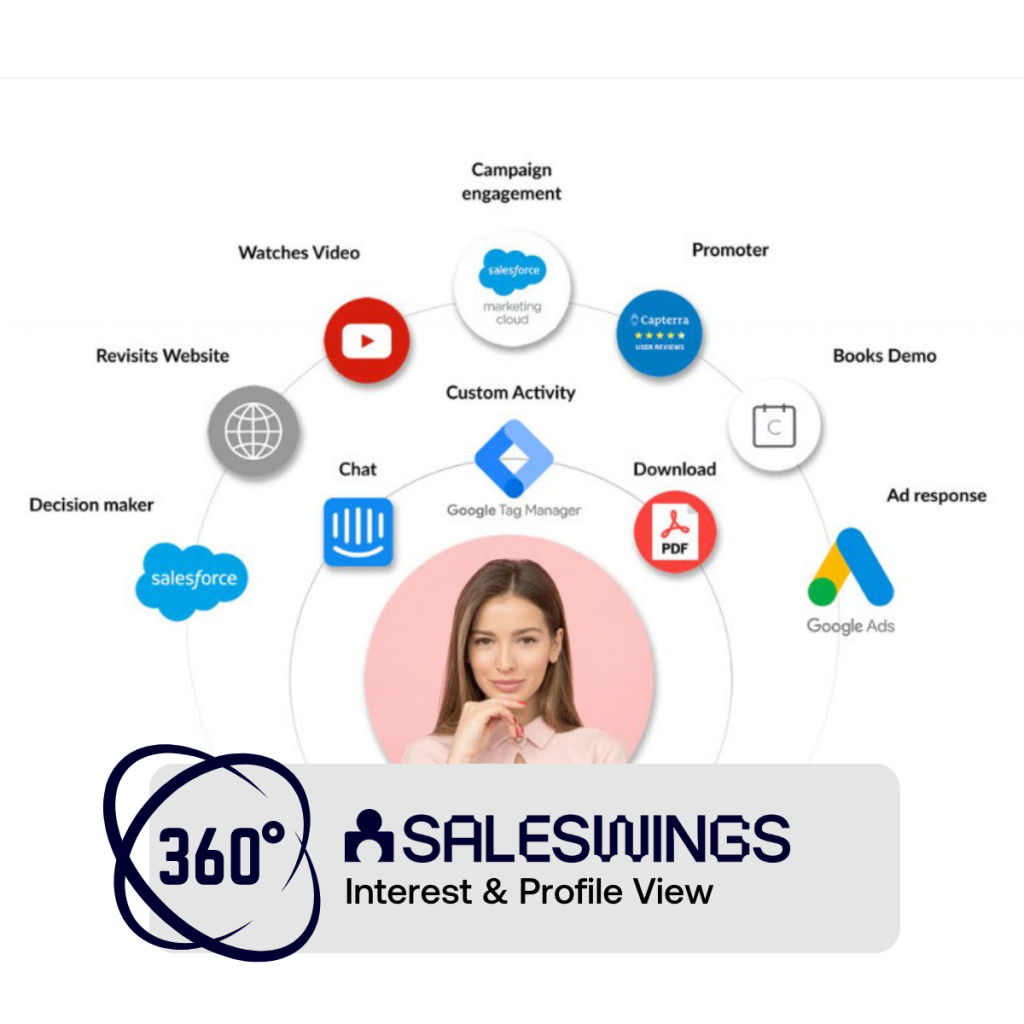
Tracking Across Multiple Domains
The shift toward first-party cookies has a real implication if your company owns more than one website domain: since first-party cookies are scoped to a single domain, you can’t track the same visitor across, say, “world-services.com” and “world-services.ch” with the same cookie.
The best-practice fix for cross-website tracking among domains you own is consolidating under one parent domain and using subdomains for different brands, regions, or micro-sites, for instance “switzerland.world-services.com” instead of a fully separate “.ch” domain. This keeps a single first-party cookie valid across everything, which matters a lot once lead scoring or attribution depends on seeing the full picture. That full picture is also what turns raw behavioral data into a buyer intent signal you can act on.
FAQs About First-Party Cookies for B2B Tracking
What is the difference between first-party and third-party cookies?
First-party cookies are set by your own domain to remember preferences, sessions, and onsite behavior, while third-party cookies come from external domains for cross-site tracking.
Practically, first-party cookies support logins, language settings, consent states, and analytics scoped to your site and subdomains. Third-party cookies let ad networks and embedded services recognize users across many sites, building interest profiles and enabling retargeting. Because they’re readable off-site, third-party cookies face stricter browser and regulatory scrutiny, which is exactly why B2B teams should treat durable, consented first-party data as the primary asset.
How are first-party cookies impacted by GDPR consent requirements?
Under GDPR and ePrivacy rules, consent is required for non-essential cookies; strictly necessary first-party cookies can typically run without it.
“Strictly necessary” covers core functions like authentication, security, and load balancing. Anything used for analytics, advertising, or personalization generally needs prior, informed, freely given consent, plus an easy way to withdraw it. Your banner should name vendors, purposes, and retention, and give granular options; store consent signals and honor them across every page.
How have changes to Google Chrome affected first-party cookies?
First-party cookies continue to work in Chrome without disruption; Google halted its plan to fully deprecate third-party cookies and kept user-managed settings instead.
For B2B marketers, that means site-scoped cookies for sessions, preferences, and first-party analytics remain reliable. Privacy Sandbox APIs still exist, and Chrome’s reversal reduced urgency, but not the strategic case for reducing cross-site dependence and building durable first-party data of your own.
What should a first-party cookie strategy include to reduce third-party dependence?
Prioritize a first-party data strategy: consented capture, clear value exchanges, server-side collection, and activation through your marketing stack.
Start with on-site behavioral events tied to a durable first-party ID, enrich with preference centers and gated content, and unify everything in your CDP or CRM. Build segments for lifecycle messaging and sales enablement, and use modeled reach for paid media. Even with Chrome’s reversal, reducing third-party dependency future-proofs your measurement and personalization either way.
How do first-party cookies work across multiple domains I own?
First-party cookies are scoped to the setting domain and its subdomains, so they won’t persist across separate domains you control.
If you operate brandA.com and brandB.com, a cookie set on brandA.com isn’t readable on brandB.com. To unify journeys, consolidate sites under subdomains, such as shop.brand.com and help.brand.com, or use privacy-compliant identity stitching through authenticated sessions and server-side IDs. Also account for browser limits like Safari’s ITP, which shortens cookie lifetimes and blocks third-party contexts, affecting cross-site flows.
How do first-party cookies work with Customer Data Platforms?
First-party cookies provide stable on-site identifiers that CDPs can unify with consented data to build persistent, actionable customer profiles.
Typically, your site sets a first-party ID, your tag or server collects events, and your CDP merges those with logged-in and transactional data to power segmentation, personalization, and analytics. Make sure lawful bases and consent governance flow from your consent platform into the CDP, and document retention plus deletion workflows from the start.
How can I combine first-party cookies with analytics and ads?
First-party cookies underpin reliable sessionization and attribution on your site, but browser policies still affect lifetime and cross-site measurement.
Use first-party analytics, and server-side tagging where appropriate, to stabilize session IDs, reduce client-side data loss, and respect consent. Expect Safari’s ITP and similar protections to keep shortening cookie lifetimes and limiting cross-site identifiers, so design your reporting around shorter windows and modeled conversions where needed. Pairing on-site events with authenticated user IDs improves resilience against all of this.
Ready to make first-party data actually actionable for sales?
See how SalesWings turns first-party cookie data into lead scores and account insight, directly inside Salesforce.
Book a callIn Conclusion
Tracking and cookies are useful for websites and for visitors alike: they make the web experience effortless and let companies take a personal approach to marketing and sales, benefiting the visitor as much as the company.
As third-party data keeps losing reach, first-party data keeps gaining relevance. Marketing teams that still lean heavily on third-party tracking should build a first-party foundation now, starting with the collection of website behavioral data.
Author Bio

Philip Schweizer, SalesWings CEO and Head of Product. Philip is a co-founder at SalesWings, a martech platform that helps revenue teams optimize every step of the funnel through buyer insights. His experience spans designing and building marketing and sales technology stacks and operational processes, helping marketing and sales operations teams gain efficiency and outcomes around the processes at the core of their day-to-day revenue operations.
Still relying on third-party data for lead tracking?
Talk to SalesWings about moving to first-party tracking that’s built for B2B, without losing the visibility your team depends on.
Book a call