

Intent Detection
Intent detection is the process and underlying technology used to recognize buying intent from behavior, analyzing patterns like content consumption, search activity, or page visits to flag when someone is likely in an active buying journey. It’s the mechanism, not the signal itself: buying signals and buyer intent describe what’s being observed, while intent detection describes how a system identifies it in the first place.
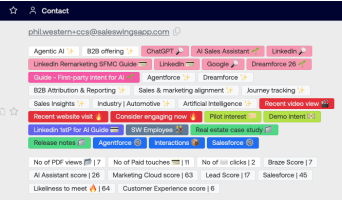
(A screenshot from SalesWings’ solution, showing behavioral data rolled up into interest tags)
Key Benefits
- Earlier pipeline visibility: Flags buying intent before a lead ever fills out a form.
- Prioritized outreach: Lets sales focus on accounts actively showing intent rather than working cold lists.
- Reduced guesswork: Replaces subjective judgment about interest with systematic pattern recognition.
- Cross-channel signal: Can combine on-site behavior with third-party research activity for a fuller picture.
Best Practices
- Combine first- and third-party signals: On-site intent monitoring plus external research data gives a more complete view than either alone.
- Validate the detection model: Confirm that flagged intent actually correlates with real conversions before fully trusting it.
- Build clear intent identification thresholds: Define what level of activity actually counts as meaningful intent, rather than flagging every visit.
- Route detected intent quickly: Intent tracking is only useful if it reaches a rep while the signal is still fresh.
Intent Detection vs. Buying Signals
Buying signals are the individual, observable behaviors, a pricing page visit, a comparison search, repeated visits from multiple stakeholders. Intent detection is the system or process that identifies, aggregates, and interprets those signals to determine whether they collectively indicate real buying intent. A single buying signal might mean very little on its own; intent detection is what determines when a pattern of signals crosses into something worth acting on.
Tools and Technologies
- Behavioral data platforms: Analyze on-site activity patterns to detect intent in real time.
- Third-party intent data providers: Supply external research activity across the web to supplement first-party signals.
- Predictive intent models: Machine-learning models trained to recognize patterns that historically preceded conversion.
Challenges and Solutions
False positives are the most common problem, flagging casual browsing or research-stage activity as strong buying intent and sending sales after leads who aren’t actually close to a decision. Over-reliance on third-party intent data without first-party context can also mislead, since external research doesn’t always reflect genuine interest in your specific solution. The fix is validating detection logic against actual conversion outcomes and weighting first-party behavioral data more heavily than external signals alone.
Related: Third-Party Intent Data, Digital Body Language, Buyer Readiness, and Interactions / First-party Data.
Frequently Asked Questions about Intent Detection
What’s the difference between intent detection and intent data?
Intent data is the raw signal, the observed behaviors and activity. Intent detection is the process and technology that analyzes that data to determine whether it indicates genuine buying intent worth acting on.
How do you know if intent detection is actually working?
The clearest test is correlation with real outcomes, checking whether accounts flagged as showing intent actually convert at a meaningfully higher rate than those that weren’t flagged. If there’s no measurable difference, the detection logic likely needs recalibration.
Turn buyer behaviour into Salesforce intelligence
SalesWings helps teams capture first-party behavioural data, score leads and accounts, trigger actions, and surface revenue intelligence inside Salesforce.
Book a demo