

According to the 2025 B2B Buyer Experience Report, 77% of surveyed buyers said their first vendor conversation was with the vendor they eventually selected. For SaaS marketing operations teams, that makes early intent detection more than a reporting convenience: the business needs to recognize buyer interest and respond while the decision is still taking shape. Meanwhile, the market around MadKudu has changed: HG Insights acquired MadKudu in August 2025, and its broader revenue intelligence platform launched in 2026.
At SalesWings, we believe the real test of lead intelligence is whether it makes marketing and sales work better together, and, if lead insights are as accessible to agents as to humans. If you manage critical revenue operations workflows, marketing automation, lead qualification, campaign measurement, or sales handoffs, a replacement decision is not to be taken lightly. This comparison of the best MadKudu alternatives separates predictive scoring platforms from intent data, enrichment, routing, and engagement solutions so you can choose the capability your SaaS organization actually lacks.
Read on to find the best fit for your data, buying journey, and revenue operations priorities.

The right MadKudu alternative depends on what matters most to you, as in, whether your bottleneck is a missing buyer signal, complexity, an unreliable fit model, inaccurate account data, or weak follow up after qualification. SalesWings is our choice for first party intent and Salesforce connected activation; Salesforce Einstein suits large teams seeking predictive scoring inside their existing CRM and who can afford on-going agency work; Bombora is valuable for external account research signals and 3rd party intent data.
Our top 3 picks are:
How we selected these MadKudu alternatives
We reviewed vendor documentation, current product availability, integration and workflow fit, and user feedback on G2. We weighted marketing operations criteria: signal provenance, fit versus intent, Salesforce activation, data hygiene, configuration effort, buyer identification, and measurable pipeline outcomes. Our team at SalesWings works closely with marketing operations, demand generation, and sales teams on behavioral qualification and CRM connected execution, which informs these practical priorities.
This is an editorial comparison, not a controlled laboratory benchmark or a claim that each tool is identical to MadKudu. SalesWings is included as our own product and readers should treat our assessment with that commercial interest in mind. Several entries offer complementary capabilities rather than complete predictive scoring replacement. We have excluded platforms explicitly prohibited in the brief.
MadKudu alternatives by use case
Jump directly to the capability your team needs most:
What is first-party buyer intent data?
First party buyer intent data is behavioral information a company collects directly through its own digital properties and customer interactions that may indicate interest in its products or services. Examples include repeat visits to pricing and solution pages, demo requests, product trial actions, relevant email clicks, webinar participation, and identifiable account activity. Because these observations happen on owned channels, the company can often interpret the signal in the context of its own offering.
First party intent is different from third party intent, which infers research activity across external publisher or professional networks. It is also different from fit data, which describes whether a person or company matches the ideal customer profile. Good qualification uses these dimensions together, weighs high value actions more than casual browsing, and respects consent and tracking rules.
For marketing operations teams, the challenge is connecting signals to the right contact or account and making the resulting interest understandable to sellers. Useful intent programs define signal windows, account aggregation, exclusions, and the workflow triggered by specific behaviors. The payoff comes when audiences, sales alerts, and campaign reports all reflect the same evidence.
10 Best MadKudu Alternatives for SaaS Lead Scoring, Intent Data, and Revenue Operations
1. SalesWings: A first party buyer intent and scoring alternative to MadKudu

Deep Dive
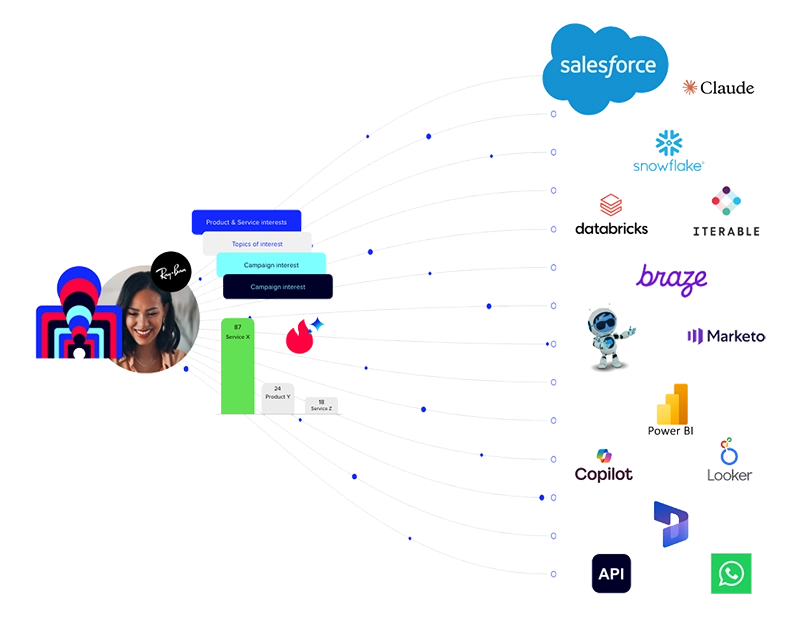
SalesWings excels at balancing simplicity and flexibility at perfection. It helps SaaS companies collect rich buyer engagement data and provides intuitive tools to translate it into actionable buyer intelligence about leads, contacts, and accounts. It associates 360° customer journey data with interest areas, behavioral scores, and account context. Rather than making teams interpret a single generic number, the platform helps reveal what a buyer is interested in, where the strongest interests lay, and how strongly they are engaging. It’s data model features a streaming API where customers can also send person and company attributes to from Salesforce and other places.
Its positioning is particularly relevant to organizations combining Salesforce Sales Cloud with marketing systems such as Salesforce Marketing Cloud, Braze, Iterable, Insider, Moengage, or Mailchimp. Native integrations put holistic lead and account scoring, predictive and point scoring, first-party intent data, and sales readiness into the operational systems teams already use; from CRM to marketing automation systems, BI solutions or data warehouses. Marketing operations can build both behavior based audiences, qualification workflows, and sales handoffs without asking sellers to maintain another prospecting workspace. Furthermore SalesWings features its own, native website personalization add-on to generate leads straight on the website using its intent data.
SalesWings also includes fit grading (aka firmographic or demographic scoring), predictive engagement measures, sales alerts, campaign reporting, AI assisted sales insights in Salesforce, and an MCP for agents who need AI ready first-party buyer context. These capabilities make it relevant beyond a narrow scoring replacement when the real problem is leveraging first party signals into operational workflows across the entire revenue team. It is most compelling where sales and marketing need a shared operating definition of the right lead at the right time.
Key Features
Best For
SalesWings is particularly suitable for SaaS marketing operations teams with a Salesforce led revenue stack. It’s data can easily be shared across teams and systems and is particularly actionable. For AI, all of its data is categorized and clearly interpretable, which is handy when it comes to providing AI agents with context when they communicate with buyers, or advise internal teams. It appeals also particularly to organizations whose marketing automation system needs stronger B2B qualification capabilities. Teams using solutions such as Salesforce Marketing Cloud, Iterable or Braze can activate identified interests in audience journeys. SDR teams benefit when marketing handoffs need to reflect both fit and current engagement and account executives can use product specific interest insights for expansion conversations. Its sales insights are probably best in class. Marketing leaders can connect campaign activity with downstream CRM outcomes for budget decisions. Technology owners who prioritize adoption and practical implementation support should examine the native integrations and configuration experience.
G2 Crowd Rating: 4.8/5 on G2
Pros
Cons
Why we picked SalesWings
We put SalesWings at number one because it addresses a common gap behind the search for MadKudu alternatives: a usable, first party understanding of buyer readiness inside existing revenue workflows. Our experience with marketing operations teams shows that a score matters only when people understand it and can act on it. SalesWings places particular weight on identifying specific product and topic interests, not simply producing a score that is then left for interpretation. That helps align segmentation, handoffs, and follow up around the same evidence.
Marketers can also tap into the data and inspect which channels and campaigns influence lead quality and opportunities rather than stopping at MQL volume. For organizations running Salesforce alongside a marketing cloud, the purpose built integrations increase speed-to-value and removes common integration head aches. The sensible evaluation is to ask whether SalesWings can improve accepted leads, response speed, and pipeline quality using your actual data.
2. Bombora: A MadKudu alternative for third party account intent

Deep Dive
Bombora Company Surge focuses on what organizations research across its B2B publisher cooperative rather than only what they do on your website. The platform identifies organizations showing elevated content consumption around selected topics. Those topic level changes can inform account based advertising, prospecting priorities, and campaign messaging.
This makes Bombora attractive when a SaaS company needs to find demand before a prospect fills out a form. Marketing operations can organize topic clusters around a product category, integration need, or industry problem. The strongest workflow matches a surging account to the CRM, checks ideal customer fit, and decides which campaign should respond.
Bombora is a different kind of MadKudu alternative because it adds external account signals rather than replicating individual first party lead scoring. The company that reads several relevant articles might still have no identified buying contact. Teams should also validate topic definitions, account matching, geographic coverage, and the cost of activating that data.
Key Features
Best For
Account based marketing programs selling to committees are natural candidates. SaaS companies with long buying cycles can use category research to identify accounts earlier. Demand generation managers can test whether topic signals improve paid media targeting. Revenue operations can combine external account intent with internal firmographic fit. Sales development teams need a contact discovery process because Bombora intent is generally account level. Organizations targeting narrowly defined subjects should audit the underlying topic taxonomy. Marketing operations teams with mature Salesforce account matching will operationalize the data more easily.
G2 Crowd Rating: 4.4/5 on G2.
Pros
Cons
Why we picked Bombora
Bombora deserves inclusion because the timing question often begins outside a vendor’s own digital properties. If a SaaS team already has trustworthy lead scores but poor coverage of anonymous market demand, research surges can make its target account strategy more proactive. The distinction between observed interest on your site and activity across a wider network must remain clear. We would test Bombora by measuring lift in qualified account engagement, not by counting how many accounts receive a signal.
Marketing operations should begin with a short set of topic clusters mapped to specific solution pages and campaign themes. We would require a baseline group of otherwise similar accounts before expanding the program. Good execution also needs suppression logic so existing customers are not treated like net new prospects. Bombora can be a valuable upstream intent source, but it is not a complete replacement for contact level behavioral qualification.
3. Salesforce Einstein: An Einstein lead scoring alternative for Salesforce first teams

Deep Dive
Salesforce Einstein brings machine learning into a CRM that many SaaS revenue teams already use. It doesn’t collect data for you, so you rely on having a large, clean data set and a lot of historical data. Its lead scoring analyzes historical conversions, lead fields, and activities to identify records that resemble past successes. Opportunity scoring extends the approach to the likelihood that an active deal will close.
For marketing operations, the attraction is an existing home for prioritization rather than another independent scoring dashboard. Scores can appear in record views, lists, and reports, making it easier to put predictions into sales workflows, though other solutions like SalesWings offer the same and are easier to set up. Salesforce also exposes contributing factors so an SDR has some context for the numerical rank.
The tradeoff is that Einstein is strongest when Salesforce contains trustworthy history and consistent process definitions. It is typically also a very heavy lift and requires agency work over time. It does not automatically replace a dedicated system for collecting granular website and product intent across disconnected properties. Editions, licensing, scoring eligibility, and configuration requirements must be checked with the Salesforce administrator.
Key Features
Best For
Marketing operations teams whose CRM is the central source of truth can gain the most, as long as data is there in abundance and clean. It is especially relevant when Sales Cloud already powers lead assignment and opportunity management. Revenue teams with years of reasonably consistent conversion data can evaluate its predictive approach, though it doesn’t collect behavioral data. Sales leaders who want priorities displayed inside familiar records avoid requiring another seller interface. Organizations with separate data warehouses should check whether their behavioral signals actually reach Salesforce, which is often not the case. Product led growth companies with extensive application events may need additional instrumentation. Smaller teams should validate licensing and data prerequisites before treating Einstein as the cheapest option.
G2 Crowd Rating: 4.4/5 on G2
Pros
Cons
Why we picked Salesforce Einstein
Einstein earns a place because it answers the first question every Salesforce focused marketing operations manager should ask: what can the existing CRM already do? For some teams, enabling native lead scoring is simpler than purchasing and governing an additional prediction engine. Its scoring factor explanations can help build basic trust with sales. The strongest evaluation begins with lead conversion quality, not the sophistication of the model.
We would not equate native CRM scoring with a full first party intent strategy. Marketing operations still needs to connect anonymous site behavior, product usage, and campaign engagement to known records before the signal can influence a model. We also recommend comparing Einstein against a specialized intent platform using the same qualified opportunity outcome. That keeps the buying decision grounded in conversion lift rather than feature checklists.
4. Cognism: A MadKudu alternative for B2B contact data

Deep Dive
Cognism concentrates on finding the people behind target accounts and providing business contact intelligence. Its value is strongest when account selection is sound but sellers cannot reliably reach the right buying roles. Contact search, prospecting workflows, and CRM integration help transform account level opportunity hypotheses into workable audience lists.
Marketing operations can use Cognism data to check whether records match an ideal customer profile. A complete title, business location, company size, and phone number often improve segmentation and the next step a seller can take. For teams active in Europe, coverage and data governance questions deserve particular attention during the trial.
Cognism does not replace a first party behavioral lead scoring engine. It contributes who a buyer might be and how to reach them, while another system can determine current engagement. That makes it an alternative buying path for teams whose poor outcomes stem primarily from missing or inaccurate prospect records.
Key Features
Best For
Marketing operations supporting an outbound sales motion can gain immediate value from improved target records. UK and European market teams should shortlist Cognism when contact reachability is the primary issue. SDR operations can standardize account research and contact export workflows. Enterprise SaaS campaigns involving buying committees need reliable role mapping. Teams serving North America and APAC should independently sample their target segments. Organizations with strong existing contact databases may not need a second provider. Buyers looking for predictive web engagement scoring should treat Cognism as a complementary layer.
G2 Crowd Rating: 4.5/5 on G2.
Pros
Cons
Pros and cons are editorial summaries of themes in the G2 user reviews and, where noted, product availability context. They are not direct quotations or statistically weighted findings.
Why we picked Cognism
Cognism belongs on the list because not every lead qualification failure is a model failure. Even the most accurate account intent signal has limited operational value without a reachable buying committee. Contact intelligence can make an existing scoring investment useful without rebuilding the entire data stack. We would start with a blind accuracy test of contacts in the exact territories and verticals the sales team covers.
The second test is workflow, not database size. Marketing operations should measure enrichment match rates, contact acceptance, and the percentage of sourced contacts that progress to useful conversations. Compliance reviews also need to examine the organization’s intended outreach practices. Cognism makes sense when contact availability is the bottleneck, but it should not be presented as a substitute for site behavior tracking.
5. Vanillasoft: A lead follow up alternative for high volume SaaS sales teams

Deep Dive
Vanillasoft emphasizes what happens after a lead enters the sales queue. Its sales engagement workspace brings together lead management, dialing, communications, and follow up activities. Instead of concentrating on predictive modeling methodology, it helps inside sales teams act consistently on assigned priorities.
For SaaS organizations receiving a steady stream of requests, this operational discipline can matter as much as the initial qualification formula. Managers can design lead distribution and cadence practices to improve response speed and reduce neglected inquiries. Marketing operations should ask whether scoring outputs can pass into those rep workflows without creating duplicated ownership rules.
Vanillasoft is not a close feature match to MadKudu’s propensity modeling. It is a plausible alternative investment when the principal issue is low follow up rates rather than weak identification of interested prospects. Buyers should examine calling requirements, user experience, and CRM synchronization alongside lead priority handling.
Key Features
Best For
Inside sales teams with high inbound volumes can benefit from disciplined work queues. SaaS organizations with phone driven qualification should investigate its dialing experience. Teams struggling with lead neglect may see more benefit than teams searching only for new scores. Sales operations can standardize outreach sequences and agent productivity measurement. Organizations focused on account based research need an additional intelligence layer. Marketing operations should verify that lifecycle stage updates sync accurately to the CRM. Distributed calling teams should also test reliability under their typical workload.
G2 Crowd Rating: 4.4/5 on G2.
The score applies to the Vanillasoft profile and may change.
Pros
Cons
Why we picked Vanillasoft
Vanillasoft makes our list because a hot lead is useful only when someone responds. Marketing operations often spends months refining point thresholds while ignoring queue discipline and response time. If sales activity logs reveal that accepted leads sit idle, an engagement layer may generate better returns than another scoring model. The best pilot pairs a clear lead priority definition with measurable time to first contact.
We would ask the team to compare cohorts with similar lead quality but different follow up patterns. That separates tool performance from the quality of the leads marketing sends. Vanillasoft’s relevance is therefore operational rather than predictive. It is a suitable shortlist candidate for high volume contact centers, not an all purpose replacement for behavioral analytics.
6. LeanData: A lead routing alternative for Salesforce marketing operations
Deep Dive
LeanData addresses the handoff between a qualification decision and the person who should own it. Its matching and routing tools help associate new leads with existing accounts and direct records through configurable business rules. For enterprise SaaS, that is a major operational challenge when territories, account ownership, and buying committees overlap.
Visual flow graphs give operations teams a way to inspect routing logic and identify where a record went. The platform can help reduce duplicate handling, assignment ambiguity, and unworked inbound inquiries. It becomes particularly valuable when the CRM already contains a dependable measure of fit or interest but the assignment process is brittle.
LeanData is best understood as a workflow and data association alternative, not a prediction substitute. It can make a current scoring model more useful by getting high priority leads to the correct owner. Marketing operations should assess ownership complexity and auditing needs before deciding whether routing deserves its own dedicated system.
Key Features
Best For
Midmarket and enterprise SaaS companies with layered Salesforce territories can benefit. Marketing operations teams frequently dealing with misrouted leads should put it on the shortlist. Sales operations managers needing audit trails can inspect why each assignment occurred. Account based sales organizations need reliable lead to account association. Businesses running simple round robin assignment may not need this degree of flexibility. Teams without a functioning scoring system must supply qualified signals from elsewhere. Administrators should allocate ongoing ownership for graph design, testing, and maintenance.
G2 Crowd Rating: 4.6/5 on G2.
Pros
Cons
Why we picked LeanData
LeanData earns its place because marketing to sales handoffs often fail in ways a better score cannot fix. A prospect might be clearly qualified yet still land with the wrong rep or sit behind an unrelated duplicate record. LeanData focuses on making routing repeatable and inspectable. That is meaningful value for marketing operations leaders measured on sales acceptance and process integrity.
We recommend tracing several real lost leads through the current routing process before considering a new tool. The decision should weigh logic complexity, audit requirements, and expected time savings. A useful pilot tracks correct first assignment, time to owner, and accepted lead rate. LeanData works best when paired with a reliable source of buyer readiness rather than expected to invent one.
7. ActiveCampaign: A rules based lead scoring alternative for SaaS marketers
Deep Dive
ActiveCampaign combines marketing automation with configurable contact and deal scoring. If you already have a solid marketing automation solution, this may not be the right pick, but at times all in one beats themall. Teams can award or remove points based in a simple way based on defined behaviors and use thresholds to start actions or change segments. That approach is accessible when marketing operations understands the buying journey but does not yet need a trained predictive model.
Its practical value lies in connecting lead qualification and message delivery. A prospect who engages with several educational assets can receive a different nurture path from one who requests a demo. Operationally, this reduces the gap between detecting engagement and changing campaign treatment.
ActiveCampaign is a lighter comparison point than a dedicated SaaS propensity platform. It is not equivalent to MadKudu’s product usage modeling, especially for complex product led funnels. The exact scoring and automation features available depend on the purchased plan, so prospects should validate entitlements during evaluation.
Key Features
Best For
Lean SaaS marketing teams can consolidate scoring with campaign execution. Organizations that favor transparent point rules over predictive models may find it practical. Marketing operations teams running high volume email nurture can act quickly on thresholds. Founder led sales teams may value simple qualification rules without specialist model administration. Complex enterprise account scoring needs a separate evaluation. Product led growth teams should confirm that application events can be sent into the platform. Buyers need to review current plans to ensure scoring is included at the expected cost.
G2 Crowd Rating: 4.4/5 on G2.
Pros
Cons
Why we picked ActiveCampaign
We included ActiveCampaign to represent an important practical choice: improve the existing automation layer before investing in an additional scoring engine. A transparent rules based score can be sufficient when buying signals are clear and the business is not producing extensive training data. Automation can then act immediately on those points. That is often more valuable than a sophisticated model that nobody uses.
Marketing operations should document exactly which events award points and when they expire. The team also needs safeguards against inflated scores from repetitive low value clicks. We would compare lead acceptance and opportunity creation before and after rule changes. If the business later needs cross property, account level, or product qualified predictions, that gap should be visible from the pilot.
8. Apollo.io: An outbound sales intelligence alternative for SaaS revenue teams

Deep Dive
Apollo.io combines B2B company and contact intelligence with outbound sales engagement. Its prospecting filters and automated sequence tools can reduce the number of applications an SDR uses to identify and contact target buyers. It also offers intent related data and sales signals that teams can consider when prioritizing outbound accounts.
For marketing operations, Apollo is especially relevant when campaign responses must become concrete seller tasks. A qualified account list can be enriched with potential contacts and passed into coordinated outreach. This can make account selection, prospect discovery, and engagement more connected than a scoring dashboard alone.
Apollo remains a different type of option from a first party predictive conversion engine. It is strongest in the external prospecting and outreach workflow, and data accuracy varies by segment. Buyers should check credit mechanics, field mappings, and consent practices before exporting large contact volumes.
Key Features
Best For
Outbound focused SaaS teams that need contacts and execution in one platform are good candidates. SDR managers can standardize targeted prospecting lists and outreach sequences. Marketing operations can use firmographic selection to support account based campaigns. Growing organizations with a fragmented outbound stack may find consolidation appealing. Data rich product led teams primarily seeking PQL scoring should compare specialist options. Global teams should sample contact accuracy across all major territories before contracting. Admins must account for credits, deliverability, and CRM deduplication requirements.
G2 Crowd Rating: 4.7/5 on G2.
Pros
Cons
Why we picked Apollo.io
Apollo is worth considering when the desired outcome is more conversations with correctly chosen accounts. MadKudu can improve who looks ready, but outbound teams also need accurate contacts and consistent execution. Apollo brings several of those operational needs together. That changes the investment comparison from model accuracy to the cost of acquiring and engaging an opportunity.
We would measure contact validity, response rates, meeting quality, and duplicate creation during a trial. Marketing operations should keep inbound and outbound qualification definitions separate enough to remain meaningful. A meeting booked from a third party database should not be confused with a product qualified user. Apollo is most persuasive when prospecting friction is the central revenue bottleneck.
10. LinkedIn Sales Navigator: An account and relationship intelligence alternative for ABM
Deep Dive
LinkedIn Sales Navigator helps sellers research accounts, discover relevant people, and follow professional buying signals. Depending on edition, its Buyer Intent capabilities surface account engagement with LinkedIn activity and other available signals. The Account Hub also helps users prioritize saved accounts and identify buying committee contacts.
For marketing operations, LinkedIn engagement can add useful context to account based campaign targeting and follow up. Sales teams can connect a signal with a person who owns a relevant function and tailor outreach to the committee. The value is especially tangible when the buyer journey spans several roles and there is no single form conversion.
Sales Navigator should not be mistaken for a standalone product analytics or first party scoring system. Its signal coverage and available filters depend on subscription tier and LinkedIn activity. Teams seeking CRM wide lead scoring need to decide how Sales Navigator signals will be used in the rest of the stack.
Key Features
Best For
Enterprise SaaS account executives selling into large committees can use it for relationship mapping. SDR teams conducting thoughtful account research benefit from rich professional context. Marketing operations supporting LinkedIn campaigns can study intent related activity. ABM teams can align account lists with the people who influence a deal. Organizations with little LinkedIn audience activity should not overstate signal completeness. Advanced intent features require the relevant subscription editions. Teams wanting automated first party website scoring should still assess a dedicated platform.
G2 Crowd Rating: 4.4/5 on G2.
Pros
Cons
Why we picked LinkedIn Sales Navigator
We included Sales Navigator because buying groups are made of people, not just account IDs. It is often difficult to turn a strong account signal into a sensible conversation without knowing who owns the initiative. LinkedIn’s relationship context helps sales make that final connection. It is useful when marketing operations needs to support account programs rather than solely optimize inbound form conversion.
A sensible pilot should compare intent flagged accounts against actual interactions and pipeline movement. We would also test the coverage of companies in the team’s most important target segments. Subscription restrictions and seller adoption are central to that assessment. Sales Navigator rounds out the shortlist as a context and execution tool, not a direct behavioral scoring replacement.
Comparison table: MadKudu alternatives for SaaS marketing operations
This table compares the primary reason to consider each tool, not feature parity with MadKudu.
| Tool | Main use case | Best for | Noteworthy |
|---|---|---|---|
| Salesforce Einstein | CRM-native predictive lead and opportunity scoring | Salesforce customers with mature lead conversion histories | Scores influencing factors on Salesforce records; expensive. |
| Bombora | Third party account research intent | ABM teams targeting named account lists | Company Surge topic spikes versus historical baseline |
| SalesWings | Flexible first party behavioral intent solution | SaaS marketing operations teams using Salesforce with marketing clouds | Behavior, intent, sales insights, attribution, and CRM native |
| Cognism | Contact discovery and firmographic enrichment | SaaS outbound teams prospecting in the UK and Europe | Verified contact details and European coverage emphasis |
| Vanillasoft | Priority lead queues, outreach, and sales follow up | High volume inbound and inside sales teams | Operationalizes lead priority through rep workflows |
| LeanData | Matching, lead routing, and revenue handoffs | Complex Salesforce territory and account assignment setups | Visual routing graphs and detailed routing audits |
| ActiveCampaign | Behavior based contact scoring and nurture workflows | Small and growing SaaS teams seeking unified marketing automation | Score thresholds can trigger nurture and contact actions |
| Apollo.io | Prospecting data, buyer signals, and outbound engagement | SaaS revenue teams scaling outbound prospecting | Combines contact discovery with sales execution workflows |
| LinkedIn Sales Navigator | Account research, buyer intent, and relationship mapping | B2B SaaS teams selling to committees and strategic accounts | LinkedIn engagement and account buyer intent signals |
Buyers guide: How to choose the right MadKudu alternative
Practical tips for choosing a lead scoring or buyer intent platform
Start with the business decision that is failing today rather than with a vendor feature grid. A marketing operations pilot should include at least one sales leader, the CRM owner, and the person responsible for consent and data governance.
Common pitfalls when selecting MadKudu alternatives
Conclusion: Put actionable intent ahead of scoring complexity
Choosing among MadKudu alternatives starts with identifying whether the bottleneck is insight, data quality, routing, or seller execution. SaaS marketing operations teams should keep fit, first party intent, and third party research signals distinct but connected. SalesWings is especially relevant when Salesforce users need behavioral qualification and actionable buyer interests in existing revenue workflows. Predictive CRM scoring, external research signals, enrichment, and routing tools all have legitimate roles when matched to the right problem. The winning investment is the one that moves qualified accounts into useful conversations and measurable pipeline.

Frequently asked questions about MadKudu alternatives
What are the best MadKudu alternatives for SaaS companies?
SalesWings, Salesforce Einstein, and Bombora are three useful starting points for different buyer qualification problems. They should not be treated as identical products.
The right shortlist depends on whether your team needs first party behavior, CRM conversion predictions, or external account research. SalesWings is strongest when marketers want to connect granular interests and sales handoffs inside Salesforce. Einstein starts with prior CRM patterns, while Bombora contributes outside account research signals. Use the comparison table to check your operating model before requesting demos.
Has MadKudu changed since joining HG Insights?
Yes, HG Insights acquired MadKudu in August 2025. Product packaging and evaluation should reflect that transition.
The broader Revenue Growth Intelligence platform announcement arrived in March 2026. Some MadKudu capabilities and documentation now appear within HG Insights product materials. Ask the vendor which scoring, first party integrations, sales activation features, and support provisions your quote includes. Do not base a migration decision on an older standalone pricing article.
What is the difference between first-party and third-party buyer intent?
First party intent comes from your company’s own observed interactions, while third party intent comes from research activity outside your owned channels. Both can help, but they answer different questions.
Owned channel signals may include pricing visits, demo requests, relevant campaign clicks, or trial usage. External research signals can reveal accounts interested in a topic before they contact you. A first party intent scoring guide explains why signal recency and specificity matter. Combining sources works best when records are matched and sellers understand their provenance.
Can Salesforce Einstein replace MadKudu lead scoring?
It may replace some predictive prioritization use cases for Salesforce customers. It does not automatically recreate every first party behavior collection and product usage workflow.
Salesforce documents how Einstein Lead Scoring learns from converted leads and related attributes. Data volume, conversion quality, licensing, and input fields matter. Run the same qualified opportunity outcome through both approaches before drawing conclusions. Check whether web and application events are available as usable inputs.
Which MadKudu alternative is best for Salesforce Marketing Cloud?
SalesWings is a strong candidate when Salesforce Marketing Cloud needs richer B2B buyer intent and qualification data. The right answer also depends on what Sales Cloud and your marketing edition already provide.
Marketing operations teams should trace how website and campaign engagement reaches contact and account records. The SalesWings integration FAQ describes intent signals used inside marketing and CRM systems. Review the available data fields, update cadence, and reporting workflow during a pilot. Ask sellers to demonstrate how they use the information in a real follow up.
Is Bombora a replacement for first-party intent tracking?
No. Bombora primarily identifies elevated research activity at the company level across external content sources.
It is useful for deciding which target accounts to research or reach with campaigns. A Company Surge explanation clarifies how topic thresholds and historical baselines work. Individual contact identification and owned website behavior require additional capabilities. Marketing operations should judge account research intent and on site interest separately.
How should marketing operations measure ROI from a new scoring or intent tool?
Measure downstream sales acceptance, speed to follow up, qualified pipeline, and conversion lift rather than just MQL volume. Compare outcomes against a credible preimplementation baseline or control group.
Start with a documented ideal customer profile and a clear lead handoff agreement. The SaaS lead scoring guide explains why fit, intent, and timing should be considered together. Monitor false positives as well as missed opportunities and revisit thresholds as campaigns change. Include operational maintenance costs in the final return calculation.
