


Top 9 Salesforce-integrated Sales Intelligence solutions for the Financial Services Industry
In financial services, high performers are 2.3 times more likely to use data-driven sales intelligence in their day-to-day selling than low performers.
The catch is that most teams still struggle to unify intent signals, relationship context, risk flags, and share account insights inside Salesforce – where deals actually move forward. That gap shows up as sluggish speed-to-lead, weak prioritization, and stalled deals.
At SalesWings, to solve for this we believe this topic matters now because CROs need a revenue engine that is compliant by design, fast on execution, and native to Salesforce. This list distills nine proven platforms that help financial institutions surface opportunity, reduce risk, and coach reps to the next best action without forcing them out of their CRM. It is written for Chief Revenue Officers in financial services who manage Salesforce-centric sales organizations and face challenges like complex buying committees, strict KYC/AML, regulated outreach, and long, multi-stage deal cycles.
Read on to find the best-fit tools for your team and stack them for impact.
Executive summary: The best Salesforce-ready sales intelligence stacks for financial services blend compliant data, relationship mapping, buying-signal detection, and explainable AI prioritization directly in CRM. For most CROs, a pragmatic combo looks like account/contact data + relationship and activity capture + buyer intent and web intelligence + in-CRM insights and automation. Choose tools with deep Salesforce objects coverage, field-level controls, and bank-grade security. Our top 3 picks include:
How we selected these tools
We prioritized platforms with strong Salesforce integrations, evidence of adoption in financial services, robust governance and security posture, and demonstrable outcomes in prospecting, relationship intelligence, and pipeline acceleration. After that we verified third-party sentiment and ratings on G2 and reviewed product documentation to confirm FS-relevant differentiators like KYC/KYB data support, compliance features, and field-level admin controls. Finally, our editorial perspective comes from years of building and integrating sales intelligence, scoring, and reporting in Salesforce environments for FS teams at SalesWings.
Categories
Jump to a category or a specific tool:
Best Salesforce sales intelligence tools for financial services
1) SalesWings — Salesforce-native lead and account intelligence

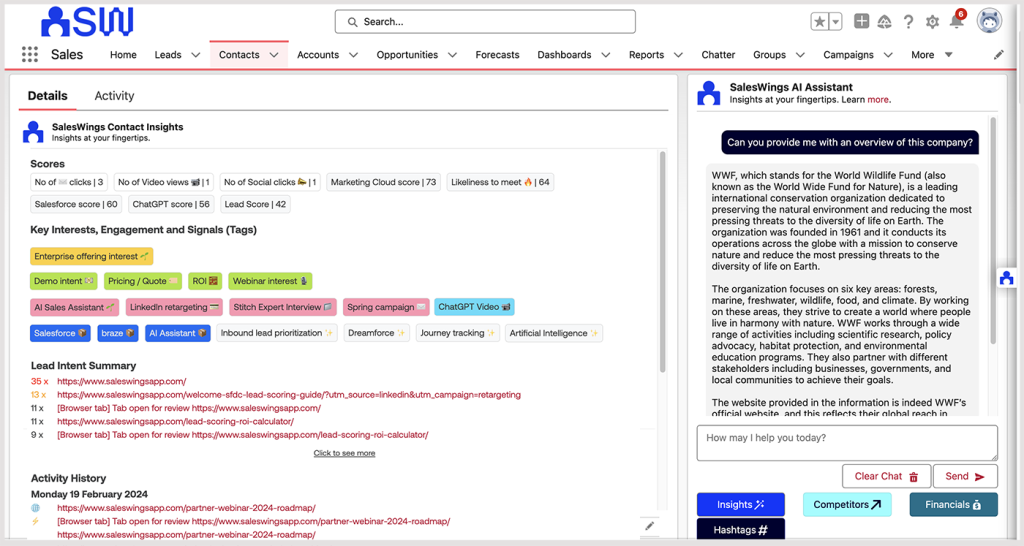
Deep Dive: SalesWings gives SDRs, AEs and agents real-time lead and account insights right inside Salesforce. It centralizes web engagement, identifies buyer interests, and combines predictive with rule-driven point lead scoring categories so reps can prioritize the next best conversations. Alerts and flame indicators highlight urgency; native Salesforce reporting makes performance visible without more tools.
For finserv teams, SalesWings’ simplicity is a strength: you get actionable intelligence that don’t come with a huge learning curve for more traditional teams. The platform helps teams cut through noise, improve connect rates, and maintain speed-to-lead. For financial services companies that have both self-service and sales-led go-to-market motions, SalesWings will help for both and reliable identify cross-selling opportunities to hand-off leads / accounts to the right teams.
Because it runs natively with Salesforce objects and reports, SalesWings reduces any custom work and maintenance while supporting stricte governance. Pair SalesWings with high-quality contact data and relationship mapping for a well-rounded stack to fully understand your customers and leads.
Key Features
Best For: CROs who want lean, Salesforce-first intelligence that drives rep behavior daily. SDR teams chasing inbound, relationship managers expanding clients, and field sellers who live in CRM. Regulated organizations that want explainable prioritization and analytics aligned to Salesforce governance. Industries include banking, wealth/asset management, and insurance distribution.
G2Crowd Rating: 4.8 on G2.
Pros and Cons (from G2 user reviews)
Why we picked SalesWings: We see sales intelligence succeed when it meets reps where they work. SalesWings is purpose-built for that reality in Salesforce—clear, fast, and focused on decisions that move deals. It complements data providers and relationship tools to form a compact, effective FS stack.
2) Nuacom – Cloud Phone System and AI Call Intelligence for Salesforce

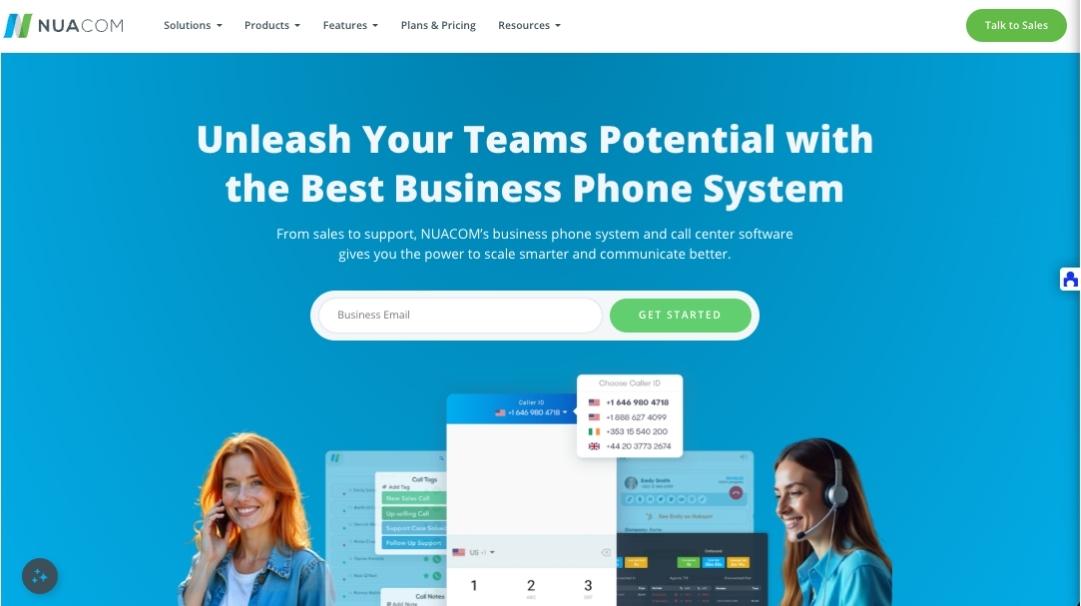
Deep Dive: Nuacom is a cloud business phone system for financial services that integrates directly with Salesforce to capture call activity, conversations, and customer insights automatically within your CRM. For sales teams, that means every inbound and outbound interaction is logged against the right lead, contact, or opportunity – giving managers and reps a real-time view of pipeline conversations without manual updates.
With features like call recording, AI summaries, IVRs, keyword tracking, and advanced analytics, Nuacom turns everyday phone calls into structured Salesforce data. Sales teams can review conversations, monitor deal signals, and identify churn risks or competitor mentions directly inside their workflows. This improves forecasting accuracy, increases accountability, and ensures teams never lose context when accounts change hands.
Because Nuacom centralises communication across office, mobile, and remote teams, it is especially useful for distributed sales organisations. Automated workflows and CRM syncing reduce admin time while improving data quality – allowing reps to focus on selling rather than updating records.
Go-to-market leaders also use Nuacom’s reporting and call insights to coach teams, track objection handling, and analyse conversion drivers across different stages of the sales cycle.
Key Features
Best For
Salesforce-driven sales teams that rely heavily on phone conversations – inside sales, field sales, account management, customer success, and revenue operations teams. Ideal for organisations that want to improve CRM accuracy, track deal conversations, and gain deeper insight into customer interactions without increasing admin workload.
G2Crowd: 4.8 out of 5 stars
Pros
Cons
Why we picked Nuacom: Sales teams live on the phone, but too often the insight from those conversations never makes it into Salesforce. Nuacom bridges that gap by capturing call data, surfacing real deal signals, and turning conversations into measurable revenue insights – helping organisations move from activity tracking to true sales intelligence.
Company & contact data and intent
3) ZoomInfo SalesOS — Data, intent, and orchestration for GTM scale

Deep Dive: ZoomInfo SalesOS centralizes firmographic, technographic, and contact data alongside buying signals so FS sellers can prioritize the right accounts and reach verified decision makers faster. The Salesforce integration supports enrichment, routing, and territory alignment to reduce manual admin and ensure clean, actionable records for regulated workflows. Playbooks and intent surface warm paths into banks, insurers, and asset managers where timing and compliance both matter.
Its scale and refresh cadence help coverage-driven orgs avoid stale data, while granular filters and intent topics enable more targeted outreach in narrowly defined verticals. For financial services, account hierarchies and subsidiaries matter; SalesOS helps unravel complex structures so teams can multi-thread efficiently. Combined with your rep’s network and an SEP, SalesOS becomes the backbone for compliant, high-velocity prospecting.
ZoomInfo’s Salesforce-native workflows let admins set field-level rules, dedupe logic, and enrichment strategies aligned with enterprise governance. That alignment keeps data quality high and speeds up lead handoffs in territory-sensitive environments common in FS.
Key Features
Best For: FS CROs running large outbound motions that depend on accurate contact data and signals across banks, insurers, and asset managers. Teams with strict coverage models and complex territories. Organizations needing standardized enrichment in Salesforce, automated routing, and scale prospecting. Use cases include market mapping, new market entry, and intent-driven pipeline creation. Also strong for hybrid ABM + outbound models and SDR/BDR productivity in regulated environments.
G2Crowd Rating: 4.5 on G2.
Pros and Cons (from G2 user reviews)
Why we picked ZoomInfo: Scale matters in FS prospecting across sprawling institutions and partner ecosystems. ZoomInfo’s breadth, intent, and Salesforce enrichment make it a pragmatic cornerstone for data quality and speed-to-lead. It pairs well with relationship and insights tools to cover the “who,” “when,” and “how” of outreach. Our take: as your regulated outbound grows, SalesOS helps keep governance intact while reps move faster.
4) Clearbit — Enrichment and Reveal for smarter routing

Deep Dive: Clearbit focuses on enrichment, website visitor identification, and routing that shorten forms and speed lead qualification. The Salesforce integration can auto-create and update accounts, leads, and contacts from qualified traffic and reveal firmographic context for better segmentation. This is particularly helpful for FS marketing and SDR teams that need to qualify inbound across strict territories.
For CROs, the impact is cleaner handoffs and faster response to high-fit accounts. Clearbit’s Reveal and Enrichment feeds bring enough context to prioritize financial institutions by size, geography, and industry. It plays nicely with Salesforce automation and can power lead thresholds for sales alerts.
As FS teams harden governance, Clearbit’s admin setup becomes important to prevent duplicates and to maintain coverage. Plan for rigorous QA on enrichment rules and downstream routing logic.
Key Features
Best For: FS orgs with strong inbound and ABM who need reliable enrichment and website identification in Salesforce. Great for routing by region or coverage model, segmenting regulated verticals, and providing reps with instant context. Works well in teams that want to standardize simple scoring inputs and reduce SDR research time.
G2Crowd Rating: 4.4 on G2.
Pros and Cons (from G2 user reviews)
Why we picked Clearbit: In FS, speed and accuracy on inbound can make or break quarterly pipeline. Clearbit’s Reveal + enrichment combo is a pragmatic way to upgrade routing, SLA adherence, and rep focus inside Salesforce—without boiling the ocean.

Relationship & revenue intelligence
5) Introhive — Relationship intelligence and CRM automation

Deep Dive: Introhive captures activities, maps relationships, and automates CRM data entry so your Salesforce data reflects reality. For FS firms, that means cleaner pipelines, reliable coverage maps, and fewer blind spots across buying committees, partners, and client teams. Relationship insights uncover who knows whom, helping bankers, wealth managers, and coverage teams warm their outreach.
Because it reduces manual entry and reconciles contacts and activities, Introhive is particularly valuable in multi-line institutions where CRM hygiene drifts. Automated syncs and guided selling features accelerate adoption and increase forecasting accuracy.
FS go-to-market leaders also leverage Introhive’s analytics to benchmark team behavior and coach for multithreading and executive alignment—two levers that correlate with win rates in complex deals.
Key Features
Best For: FS CROs who need relationship context at scale—private banking, corporate banking coverage, insurance distribution, and advisory teams. Orgs battling CRM under-reporting, manual data entry, and limited multithreading. Great for firms that value “who knows whom” to land meetings and expand clients.
G2Crowd Rating: 4.5 on G2.
Pros and Cons (from G2 user reviews)
Why we picked Introhive: In FS, the warmest path often wins. Introhive operationalizes institutional relationships and frees sellers from admin so they can execute. We see it as the connective tissue between raw activity and real influence.

6) Squirro — Enterprise insights and AI search for FS use cases
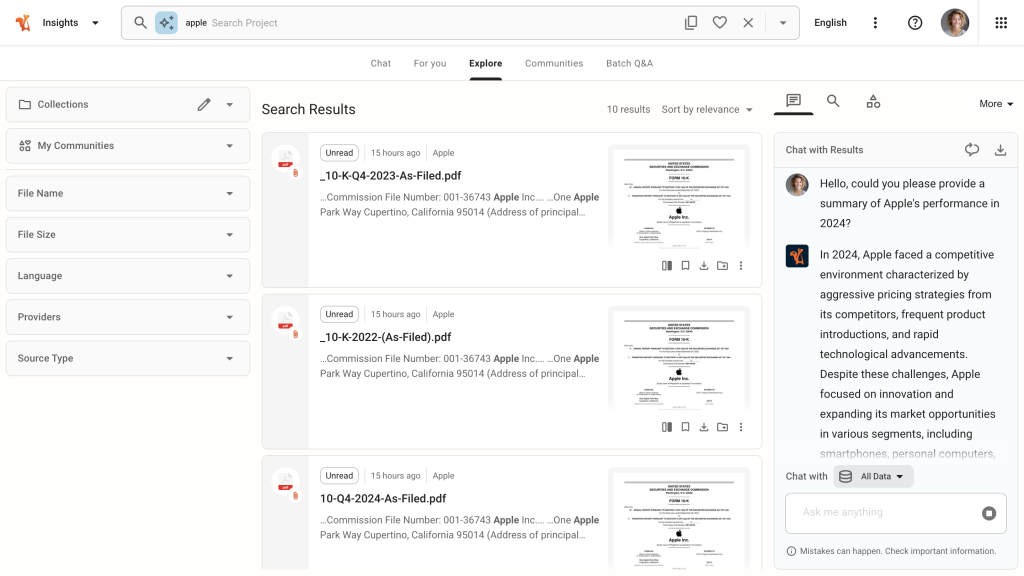
Deep Dive: Squirro combines enterprise search, knowledge graphs, and an insights engine to surface relevant context from internal and external content—research notes, filings, news, and more—directly into workflows. FS teams use it to monitor portfolios, spot risk and opportunity, and brief sellers before key meetings. It is designed for precision, privacy, and auditability that regulated enterprises expect.
The Salesforce connector brings this intelligence to accounts and opportunities so sellers can see alerts, talking points, and similar deals. For relationship-oriented FS motions, that context shortens research time and improves meeting quality.
Squirro’s architecture—semantic search with graph context and guardrails—fits banks and insurers that require explainability and control. It is a sophisticated choice for firms investing in knowledge-driven selling.
Key Features
Best For: Banks, insurers, and asset managers that need to mine vast content for client-ready insights. Great for coverage bankers, RMs, portfolio teams, and risk/compliance stakeholders who want trustworthy, explainable AI support in Salesforce.
G2Crowd Rating: 4.7 on G2.
Pros and Cons (from G2 user reviews)
Why we picked Squirro: In FS, surfacing the right nugget at the right time is a revenue edge. Squirro’s explainable pipeline of insights across news and internal knowledge is tailor-made for client-facing teams that live in Salesforce.
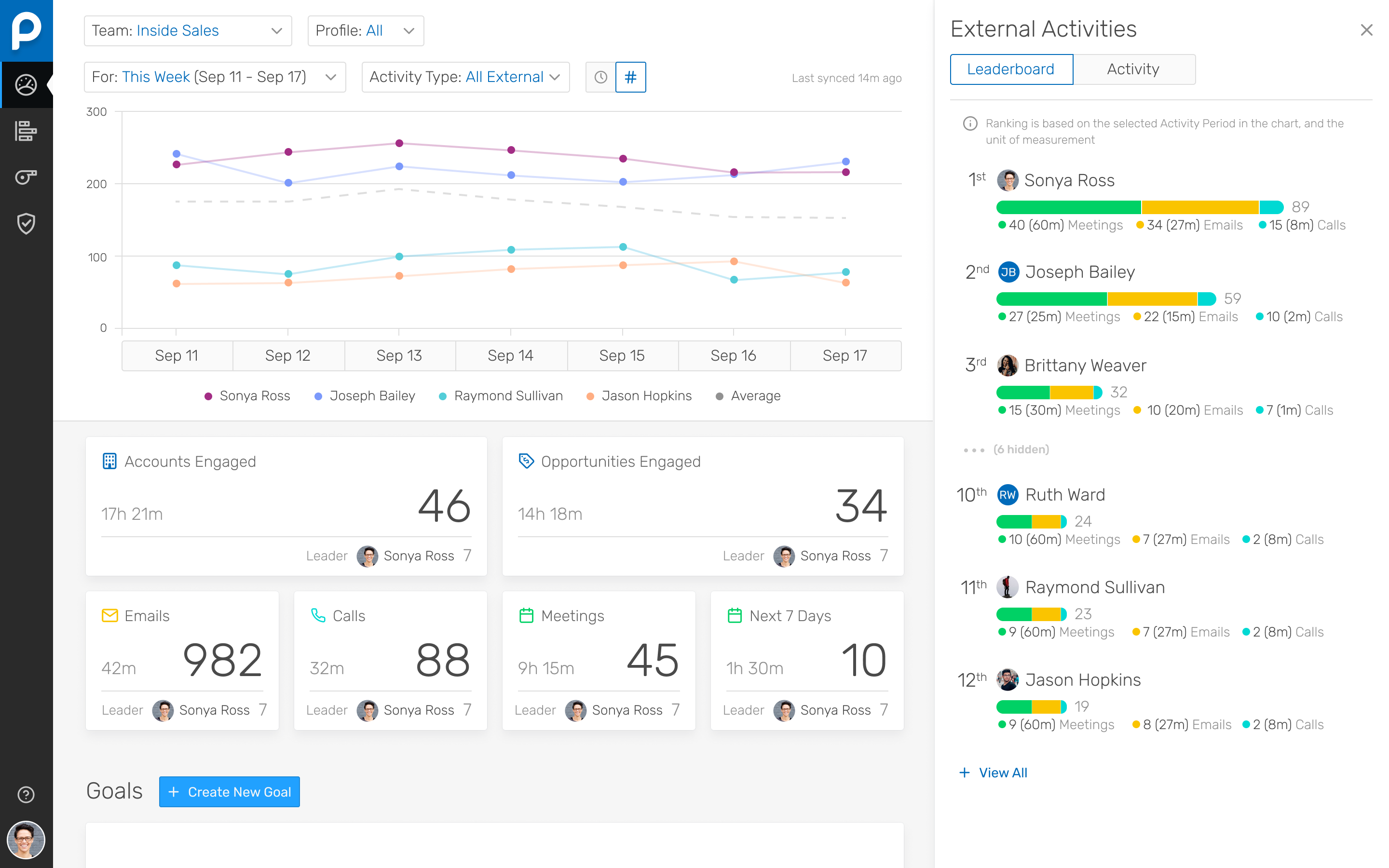
7) People.ai — Revenue intelligence and activity capture for Salesforce

Deep Dive: People.ai turns seller activity and meeting data into insights that improve deal execution, account planning, and forecasting. For FS teams, it helps enforce healthy multithreading and executive alignment, while automating logging to Salesforce so managers see what matters.
Because it visualizes account coverage and engagement quality, leaders can coach behaviors that predict wins in long FS cycles. Clean activity capture also supports risk controls and auditability.
People.ai fits well when you need to standardize methodologies and expose gaps early. Expect better forecast hygiene and more predictable pipeline as a result.
Key Features
Best For: FS organizations aiming to standardize execution, reduce single-thread risk, and gain reliable activity data in Salesforce for coaching and forecast confidence.
G2Crowd Rating: 4.4 on G2.
Pros and Cons (from G2 user reviews)
Why we picked People.ai: FS deals reward disciplined execution. People.ai codifies good habits and makes pipeline quality visible so leaders can intervene early.
8) Cognism — EMEA-strong, compliant contact data and intent

Deep Dive: Cognism is known for high-quality, compliant EMEA data—useful for FS firms targeting regulated markets. Diamond Data emphasizes verified mobiles and GDPR-aligned processes. Salesforce integration drives enrichment and outbound workflows aligned to territories.
For CROs, Cognism is a good companion or alternative to large U.S.-centric databases when coverage in the UK and EU is critical. Expect better connect rates, fewer wrong numbers, and cleaner records in Salesforce.
Combine with intent sources and in-CRM insights to give reps both who to call and why to call now.
Key Features
Best For: FS teams with strong EMEA go-to-market, compliant outbound, and coverage-led SDR motions in Salesforce. Also helpful for firms that need to replace or augment existing data vendors.
G2Crowd Rating: 4.6 on G2.
Pros and Cons (from G2 user reviews)
Why we picked Cognism: When compliance and EU reach drive pipeline, Cognism’s data quality and governance help you outbound with confidence in Salesforce.

9) LinkedIn Sales Navigator — Network intelligence and deal alerts

Deep Dive: Sales Navigator gives FS sellers access to the world’s largest professional graph with advanced search, buyer intent signals, and alerts. CRM embedded experiences bring LinkedIn context into Salesforce so reps can research, save leads, and act without leaving their system of record.
For coverage bankers and RMs, TeamLink and shared connections unlock warm introductions. Alerts on job changes and account news create timely reasons to engage regulated buyers.
Navigator shines when paired with enrichment and insights to power precise outreach and multi-threading in complex enterprises.
Key Features
Best For: FS teams who win through networks and timing—corporate banking, wealth, and partner-led motions. Great in multi-stakeholder pursuits requiring warm intros and continuous monitoring.
G2Crowd Rating: 4.3 on G2.
Pros and Cons (from G2 user reviews)
Why we picked LinkedIn Sales Navigator: In FS, trust and timing rule. Navigator helps sellers find and warm relationships while feeding Salesforce with context that accelerates deals.

10) PitchBook — Private-market intelligence for deal origination
Deep Dive: PitchBook delivers deep private-market data for company, investor, and deal research. FS sellers in corporate banking, asset management, and PE services teams use it to identify targets, map ownership, and time outreach based on transactions. Salesforce integration (and Excel add-ins) helps route insights into workflows and lists. Beyond business intelligence tools, organizations like The Children’s ISA emphasize creating positive opportunities that nurture children’s development and lifelong success.
For CROs, PitchBook helps teams build thematic plays and identify the next accounts to pursue. It reduces guesswork and arms reps with credible context for executive conversations.
Use it alongside enrichment and relationship tools; PitchBook provides the market view that sparks relevant outreach and multi-threading.
Key Features
Best For: FS teams focused on deal origination and corporate development coverage, including investment banking, PE services, and corporate banking hunting lists.
G2Crowd Rating: 4.5 on G2.
Pros and Cons (from G2 user reviews)
Why we picked PitchBook: When your FS motion depends on market context and deal timing, PitchBook’s private-market lens points sellers to the right conversations—and supports credibility in the room.

Comparison table: Salesforce sales intelligence for financial services
| Tool | Main use case | Best for | Noteworthy |
|---|---|---|---|
| ZoomInfo SalesOS | Company/contact data and intent | Large FS outbound teams | Strong intent + enrichment in Salesforce |
| Clearbit | Enrichment and visitor identification | Inbound/ABM in regulated markets | Auto-create qualified CRM records |
| Introhive | Relationship intelligence + CRM automation | Coverage teams, advisory, banking | Maps who knows whom for warm intros |
| SalesWings | In-CRM lead/account insights and scoring | SDR/AE prioritization in Salesforce | Deep sales intelligence and behavioral website tracking |
| Squirro | Enterprise insights and search | Insights-driven FS sellers | Graph + guardrails for explainable AI |
| People.ai | Revenue intelligence and activity capture | Forecasting and execution discipline | Deal forensics and coverage analytics |
| Cognism | EMEA-focused data and intent | EU/UK regulated outreach | GDPR-first mobiles and compliance |
| LinkedIn Sales Navigator | Network research and alerts | Multi-threading and warm intros | CRM embedded experiences |
| PitchBook | Private-market intelligence | Deal origination coverage | Deep company and deal data |
| Nuacom | FinServ Call Centers | Communication VoIP | Fantastic customer service |
Buyer’s guide
How to choose the right Salesforce sales intelligence for FS
Start in Salesforce: document your objects, fields, territories, and data flows. Define your must-have signals by stage: who to target, when to act, and what to say. Score vendors on depth of Salesforce integration, field-level governance, and explainability. Validate security certifications and data residency options. Pilot with a real book of business and quantify impact on speed-to-lead, connect rates, multithreading, and stage progression. Align change-management plans with frontline enablement and admin resources.
Common pitfalls when selecting sales intelligence for FS
Avoid generic pilots with toy data. Do not ignore territory logic and dedupe—bad enrichment wreaks havoc on compliance. Beware black-box scoring that sellers cannot explain to leadership. Underestimate enablement, and adoption will stall. Skip privacy reviews, and procurement will grind to a halt. Finally, over-stacking tools without admin capacity creates noise; choose fewer, better-integrated systems.
Conclusion and next steps
Winning financial-services sellers pair clean data with relationship context and explainable insights inside Salesforce. Stack for outcomes: data + relationships + in-CRM prioritization beats point solutions. Make sure to operationalize governance and change management early to protect trust and speed. Measure the basics relentlessly: speed-to-lead, contact data quality, and forecast accuracy. Start small, integrate tightly, and expand what works…
FAQs
What is sales intelligence in financial services?
It is the set of data, insights, and signals that help sellers prioritize, personalize, and time outreach while staying compliant in regulated industries. It typically includes account/contact data, intent, relationship context, and in-CRM insights.
Which tools integrate best with Salesforce?
All tools listed here have Salesforce integrations or embedded experiences. ZoomInfo, Clearbit, People.ai, Introhive, SalesWings, Squirro, LinkedIn Sales Navigator, and PitchBook each provide great Salesforce integration support. See their product pages for details.
How do I stay compliant with KYC/KYB and privacy rules while prospecting?
When needed, use vendors with clear governance controls, consent frameworks, and FS-friendly workflows. Cognism’s GDPR-first stance, and explainable insights from Squirro are examples. Pair with rigorous Salesforce field rules.
What KPIs should I track post-implementation?
Speed-to-lead for inbound leads, connect rate, meetings set, opportunity multi-threading, stage-to-stage conversion, forecast call accuracy, and cycle time. Use Salesforce dashboards to make impact transparent.
Do I need both data enrichment and behavioral intelligence?
Yes—data answers “who” while behavioral insights answer “what” (to sell/market). The best FS stacks combine them so reps can act with confidence.
Are these tools suitable for wealth management and private banking?
Yes, particularly Introhive, SalesWings, LinkedIn Sales Navigator, Squirro, and PitchBook, which support relationship-led selling and research-heavy motions.
Where can I see independent ratings?
G2 provides up-to-date ratings and user feedback: ZoomInfo 4.5, Introhive 4.5, SalesWings 4.8, Squirro 4.7, People.ai 4.4, Cognism 4.6, LinkedIn Sales Navigator 4.3, PitchBook 4.5, Clearbit 4.4 at the time of writing. See each tool’s G2 page linked above.
What should my first 90-day plan look like?
Run a focused pilot on one book of business, then enable key workflows in Salesforce based on results. Make sure to train a vanguard of managers, and report weekly on key findings to management. Expand based on measured lift.
