

This article was updated on March 9, 2026 with an up-to-date FAQ section.
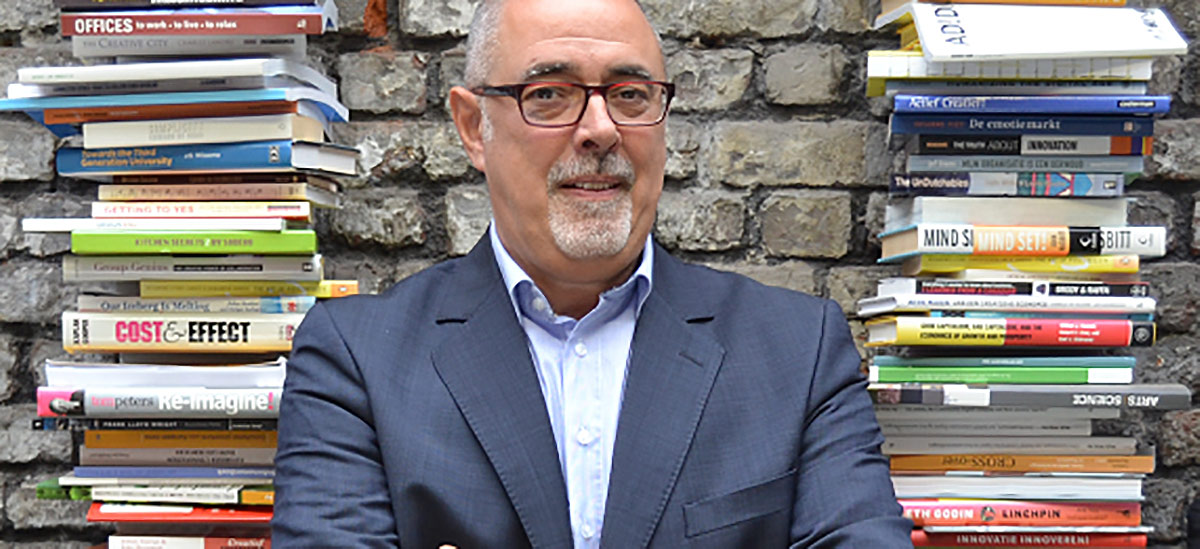
Paul van den Brande has long-standing experience in building and nurturing relationships across the globe through his unique approach to business development. In this concise interview Paul offers actionable tips to modern business development managers from both successes and failures.

About Paul van den Brande
Born 1953 …. from a litter of 6, which is always a struggle for attention and a share, Paul Van den Brande was well prepared for business. He is a personification of the American Dream, starting as a filer up to owner of several companies. His slogan “Passion in Everything You do!” is clearly applied throughout. (More about Paul here)
SalesWings (SW): “Paul, let’s dive right in. If you were to give a definition of Business Development (BD), what would that be?”
Paul van den Brande: “That’s easy Philip: Business Development is the process of continuously boosting communication, PR, sales and marketing to be & remain successful in the selected (new) markets. BD thus includes parts of all the above functions – short and simple.”
SalesWings: “How has Business Development (BD) changed? And how did it change with internet?”
“When functional titles such as Sales Manager and the likes failed to shake off its negative connotation, all of the sudden it got renamed Business Development Manager. That is unavoidable in small and mid-sized companies where the above functions are a 1-person team. The C-level still struggles to produce endurance in funding the more lengthy business development process.
Internet added global reach in extending influence (not to be confused with lobbying) an indispensable element for business development, even if it does not nurture the art of 1-to-1 communication necessarily (*).
But the internet helps to shorten finding what are: Personal Interest – Professional Interest – Business Interest – and sometimes pinpoints Business Decision Units. When really lucky, it pinpoints the Dominant Buying Motive of prospects before walking into a meeting for checking on relevance.
(*) When someone’s actions, or lack of it, bother me, I still seek direct 1to1 contact to sort that out even with the less personal internet. When I find out unintended error has occurred I ask for a correction, people make mistakes, I do too… and everyone deserves a second chance for a first impression. When I meet resistance or refusal to correct their action, I still think twice before starting a witch-hunt on social media and kick-off trial by public opinion. Because this is often met and responded to by media-hooligans, excuse my French, mostly fueling and voicing (parrot) their own frustration in condemning the easy victim.
SalesWings: You have an impressive career path behind you, and without doubt you have learnt a lot from both good and bad experiences. What are 3 key learnings that you have made, that bring you most forward in your career?
“Oh, I am allowed only 3…. Well randomly :
(1) Allow the tree to grow roots; when starting a new venture prevail from changing strategy and tactics all too soon.
(2) Hands-on-no-nonsense buzz-word free approach to people that builds trust through sincere interest in the person.
(3) Network-Network-Network. If people like you, they’ll listen to you, but if they trust you, they’ll do business with you. Sic. Zig Ziglar”
SalesWings: Tell us about your latest book “The Missing Link Between Marketing and Sales”. You put in a lot of your know-how, but I assume not all will have, or take, the time to read through it. What are key take-aways from that book, and what sections should busy manager focus on?
“Everyone reads different things first, according to their position in the sales cycle, sitting on either side of the fence or functional title. My recommendation would be in random order (the numbers indicate the chapters – there are 16 chapters in total).
3. Business is granted based upon trust and influence.
6. What kind of working skill do we need to be a qualified Business Developer?
8. The importance of Networking Smart.
9. Calling on the CEO – Executive Relationship Marketing.
10. Appointments & how to help the prospect with positioning/placing and naming Business Development – The Missing Link between Marketing & Sales 8 objections when applying for a meeting. Learn to fly around them. If you’re feeling overwhelmed with administrative tasks, it may be time to hire a virtual assistant.
11. Questions are never an exam – when meeting difficult or shy people just use choice questions: e.g. Whose budget is this coming out of sales or marketing?
13. How to clarify: It costs too much – I’m satisfied with my current vendor – It doesn’t meet my needs – It’s not in our budget – We have had a bad experience with your (mother) company in the past
15. Red-Hot Cold Call-Mail Selling Business Development Cycle. Remember: A rejection never means ‘no.’ It means ‘not now.’ Until the prospect becomes a customer, the sales life cycle continues.
7. Read like your eyes are on fire – Street Smart Codes & Practices – are all the 1650 reactions and contributions of named outspoken co-authors and fun to read.
A reader commented the other day “I am enjoying reading your book. I focused more on the chapter which deals with rejection and follow-ups. It is not easy sometimes with rejections and follow-up emails, but they are things that I am getting used to and they give motivation to work harder and focus on the positives. Your book is easy to read and it covers the nitty gritty of things in an effective and comprehensive manner”
SalesWings: You have experience working as a CRM consultant. What should a CRM do for a business development professional, and what should one keep in mind when choosing a CRM for his organization?
“This really is the turf of Yves VdB as a Board Member of Delaware Consulting.
CRM should help explore and understand your market and buyer personas, engage with potential buyers across channels, to qualify them as leads, and assure your business development efforts have maximum results. As today’s buyer are more and more digital and leave buying signals in their digital footprint, CRM selection criteria should include leads integration from digital channels and social media.
The FAST-CRM product offering is specifically designed to help mid-size companies improve sales, marketing and service management. The solution streamlines day-today operations to reduce cost and improve productivity. Even with commitment-shy executives and change-fearing employees, it is possible to implement CRM into your enterprise successfully.
“CRM is not part of a business strategy, CRM is the business strategy,” says Claudio Marcus, a research director at Gartner.
One only needs to find the advisor who will tell prospects straightforward whether and how much is a CRM Total Cost of Ownership and dare to call a spade a spade – upfront and claim ownership at execution.”
This is all possible because of the style of leadership that is being followed here i.e., servant leadeship. As mentioned in kurtuhlir.com/definitive-guide-to-servant-leadership/ this style of leadership helps build trust and loyalty between you and your team members. It’s no secret that when leaders effectively serve their teams, performance improves significantly.
SalesWings: Today you’re inspiring a lot of people. Who are the people that have inspired you over the past years, and today?
“Lily De Bondt – The Wind Beneath my Wings, and for business development Meg C. (Maritsa) Skinitis and ir. Koen Mioulet.”
SalesWings: What are the 5 must do’s that make a great business development manager?
“As such I am following Megs BD-Bible:
- Read like your eyes are on fire, then read some more.
- Cultivate to the point of being “gifted” with the ability to listen.
- You are not in command of the theater. You are the ringmaster, not the star.
- Respect everyone including the parking attendant.
- Know the company you represent – inside out.
SalesWings: What are 5 Don’t Do’s that business development should avoid?
- *Never give up! Ever! No means not Now!
- Never under estimate what may seem to be the least important person in the meeting.
- Most deals fail in their infancy because the Business Developer talks too much – usually about themselves.
- Do not speak to them kindly because you can usurp – otherwise they will know you are a fraud and very superficial.
- Skimping on a tip means you’re a real j***k.”
SalesWings: You’re rather active on LinkedIn. What does LinkedIn do for you, and what are some tips you can give?
“LinkedIn is a window to the business world and a showplace to earn trust and respect through sharing knowledge. As such it is an important channel in the Business Development mix. What I do is share ‘snippets’ (sic.) of BD & related knowledge both from experience and as found on the world wide web. It’s a great platform to follow emerging trends which allows one to update your go-to-market and (re-) shape the company blueprint. A finger to the pulse of the generations emerging business processes of the future. The Independent Co-creator Stakeholders eco-system innovates business development collaboration for anyone seeking to embrace LinkedIn in social BD reach.”
SalesWings: You have done business in many different cultures. When it comes do doing business in an international environment, how important are “cultural differences”?
“Culture has many definitions and it impacts on our reaction and decision-making relative to every-day facts and circumstances.
Why is cross-cultural competence critical to your professional future and the viability of your company? It’s omnipresent in every business interaction and strategic decision. For example, if a company’s director of marketing embarks on a campaign demonstrating how speedy its service is, when the underlying cultural motivation of the international customer is almost completely focused on customer service, the value proposition consists of selling ice in the winter time.
Study and adhere to the local culture of the country before embarking into a wild goose chase and trying to copy-paste and project local success formulae against/to global business prospecting. For example a few local sentences do wonders, as I experienced when working with the Japanese.”
SalesWings: You’re a business development, but first and foremost a human, aren’t you? ;-) Tell us what do you do when you’re not on LinkedIn or engaged in some business discussion?
“I enjoy the simple things of live, and family is always first – before business! I am also a passionate Scrabble player. Then of course I combine what I enjoy with business, I really love writing books… and reading thrillers. When I am more in the social mood I do city trips and mix with all kinds of people. Last but not least, I am a base-baritone singer in a choir.”
SalesWings: Then let’s meet up and play some Scrabble! Thank you very much Paul, your tips are truly inspiring.
Frequently Asked Questions
- How does business development build trust faster?
- What does trust-based selling look like in practice?
- Which CRM features help relationship building most?
- Why is relationship building more important than pitching?
- How should business development managers use their network?
- How can LinkedIn support business development relationships?
- How do cultural differences affect business development?
How does business development build trust faster?
Business development builds trust faster when you stay consistent, listen closely, and show sincere interest before pushing for a commercial outcome.
Trust grows from a hands-on, no-nonsense approach, patience with new initiatives, and genuine curiosity about the person behind the role. That means fewer buzzwords, clearer follow-ups, and better questions instead of rushing into a pitch. Buyers usually decide whether you feel credible long before they evaluate every detail of your offer.
Tip: slow down just enough to let the relationship develop, then keep proving reliability in every interaction.
What does trust-based selling look like in practice?
Trust-based selling means asking better questions, talking less about yourself, and helping prospects move forward without pressure or theatrics.
In practice, that looks like clarifying objections calmly, using choice questions with hesitant buyers, and treating rejection as “not now” rather than a final dead end. It also means avoiding the common mistake of talking too much, especially about your own company. Strong business development conversations feel relevant, human, and useful because the prospect is doing more of the talking.
Tip: for a practical refresher, this guide on sales conversation tips is a helpful complement.
Which CRM features help relationship building most?
Business development teams need CRM features that capture buyer context, surface intent signals, and make follow-up timing easier to manage.
A CRM is useful when it helps you understand markets and personas, engage across channels, qualify leads, and connect digital behavior to real outreach. The best setup supports relationship building by preserving conversation history, highlighting engagement from digital channels, and helping teams act before interest goes cold. That keeps follow-up personal instead of generic.
Tip: for a practical extension of that idea, see these tips on converting B2B leads into customers faster.
Why is relationship building more important than pitching?
Relationship building matters more than pitching because trust creates the conditions for serious conversations, referrals, and long-term buying decisions.
A polished pitch may get attention, but it rarely creates staying power on its own. Simply, if people like you, they may listen, but if they trust you, they will do business with you. For business development managers, that shifts the goal from sounding impressive to becoming useful, respectful, and memorable over time.
Tip: a good habit is to measure each conversation by whether it deepened credibility, not just whether it moved the deal forward that day.
How should business development managers use their network?
Business development works best when your network is treated as a long-term ecosystem, not a list of people to contact only when needed.
Paul’s “Network-Network-Network” advice is really about staying visible, helpful, and relevant across time. The strongest networks are built through regular follow-ups, thoughtful introductions, shared knowledge, and respect for every person in the room, not just the most senior title. That approach also reduces dependence on cold outreach because warm context travels faster than brand messaging alone.
Tip: schedule weekly time for nurturing existing relationships, not only hunting for new ones.
How can LinkedIn support business development relationships?
Business development on LinkedIn works when you use the platform to earn trust through visibility, insight, and steady professional presence.
LinkedIn is a window to the business world and a place to build respect by sharing useful knowledge. That means posting relevant snippets, commenting thoughtfully, and using your profile to make your expertise easy to understand. It’s less about volume than consistency and credibility. Over time, LinkedIn helps you stay close to trends, spot buying signals, and remain top of mind with potential partners and prospects.
Tip: a simple tip is to share what you learn in the field, not just what you want to sell.
How do cultural differences affect business development?
Cultural differences affect business development because buyers interpret value, speed, authority, and trust through local expectations and habits.
Avoid copying a winning formula from one market into another without adjustment. A value proposition that feels compelling in one country can feel irrelevant in another if the customer’s priorities are different. Even small signals, such as learning a few local phrases or adapting your communication style, can improve trust quickly.
Tip: research how decisions are made locally before you start prospecting, not after conversations begin.


SalesWings
Fully automated add-on for advanced Lead Activity Scoring. Combine SalesWings with your Outbound Sales Development tool, Gmail, Outlook and even LinkedIn, to track in real-time when your Leads visit your website – and to understand who’s most engaged, outside of your Inbox!
It automatically notifies the sales team about a lead’s interest, acting as an opportunity radar.
