Is your B2B sales and marketing ready to get predictive on the quick and dirty?
Yes?
Good. Follow me.
A Hacker’s Guide to Launching Predictive B2B Sales & Marketing
This article was updated on April 9, 2026 with an up-to-date FAQ section.
The terms “Predictive,” “Machine Learning” and “A.I.” sound expensive, hype-driven, and essentially meaningless to the modern B2B sales and marketing leader. But look out, because the premise behind predictive is grounded in practicality and we’re reaching a tipping point in the capabilities and availability of predictive technology in B2B sales and marketing.
The tipping point: The sophistication and mass availability of data intelligence software. In B2B, you used to need a massive budget or a committed business intelligence team to get great predictive insights for sales and marketing. But nowadays tools such as website tracking and lead scoring (SalesWings), Predictive outreach (Crystal knows) and many more have brought an end to this era.
Want to see for yourself? Let’s walk through an entire predictive implementation process to launch a soup-to-nuts predictive B2B sales and marketing operation. It’s quick. It’s cheap. And most importantly, it’s effective. Here we go.
Step 1. Mass Enrich Customer, Prospect and Target Account Data
Recommended Tools: Clearbit, LeadGenius.
The first thing you need comprehensive profiles of your current clients. Who they are, how they are doing, and what they care about. Here’s how to get that information immediately and at next-to-zero cost.
Take your customer database. All your current client accounts. Add their domains into a Google Sheet in Column A.
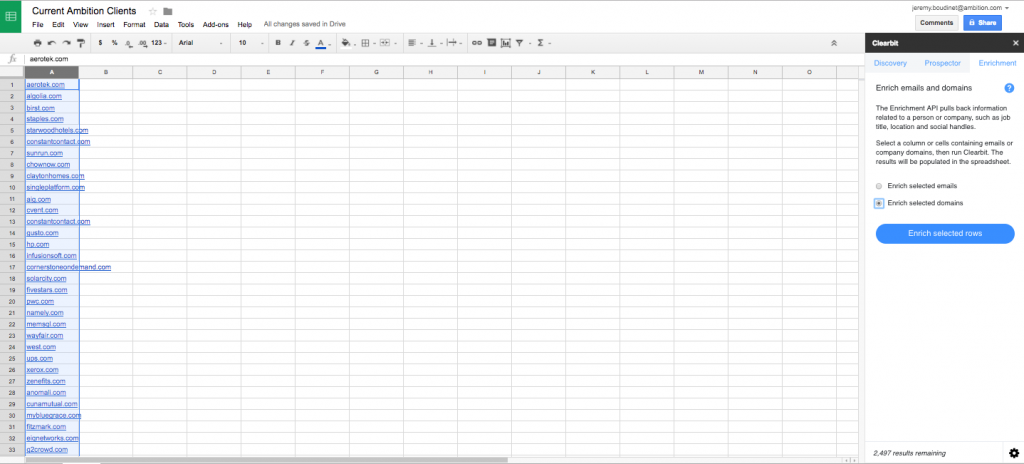
Purchase 2500 Clearbit enrichments for $99 (if technology stack is a key part of your targeting process, pay $50 to get that added to each of your 2500 enrichments). Get the Clearbit add-on for Google Sheets. Then, go to your sheet, open the Add-On. Highlight Column A and hit enrich.
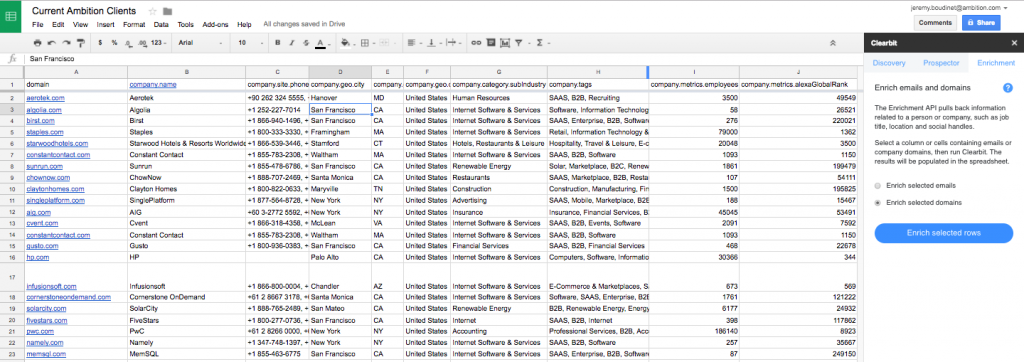
A new tab will appear with the account data fully populated for each of your clients and your target opps.

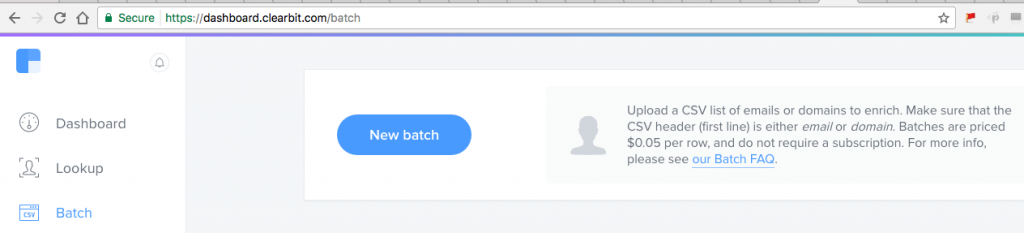
Sample data points you’ll see: Industry. Headquarters location. Twitter followers. Alexa rank. Number of employees. Download each enriched tab into a CSV and add it to your sales and marketing systems of record. If you want to pay even less ($0.05 per account enrichment), simply create an account and do a batch enrichment of all your account domains.
For best results, we recommend adding additional relevant data points from your CRM (contract size, number of users, etc,) on each customer account. Try to find a solution that will automate that process plus create more granular data on each customer account (ex. sales team size, number of employees in [x] city).
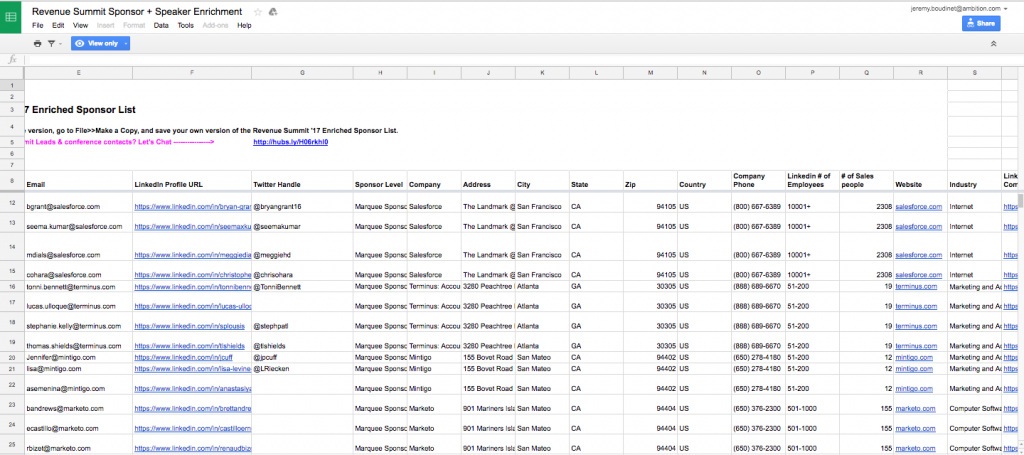
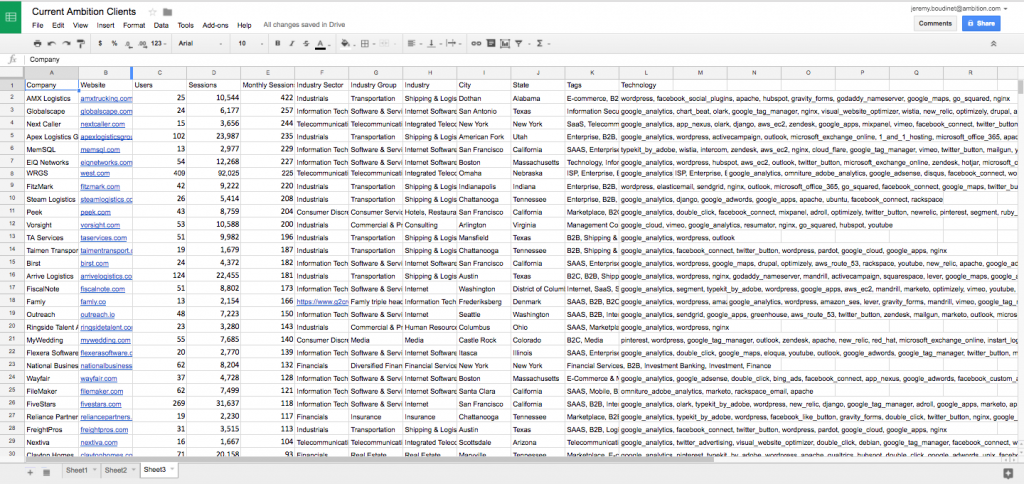
We added number of users, average sessions per user, plus and overall client engagement score, one of our own metrics. The key is to know everything about who your customers are, which ones are successful, and which data points have causality with success.
Step 2. Use Machine-Learning Tools to Flip Data into New Sales Targets
Recommended Tools: LeadCrunch, Infer, LeadGenius
Your next step? Letting powerful service providers like LeadCrunch, Infer, or LeadGenius take all that data and use machine learning algorithms to tell you, in minutes, which new accounts you should start attacking.
For the B2B team on a budget, a free option that will net you 100 new target accounts is LeadCrunch. Simply submit your customer data to LeadCrunch and get a (free) list of qualified leads, created by machine algorithm using your own client data.
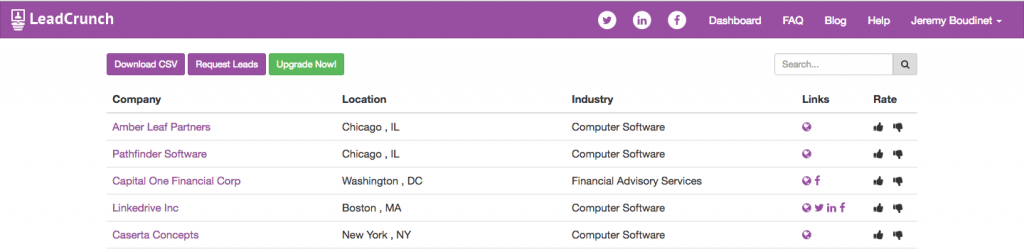
Take the leads you get from LeadCrunch and enrich their full account data using your leftover Clearbit enrichments. For Salesforce users, try a 14 day trial with Infer to find the best fits for conversion already in your CRM, using the same account data-based approach as LeadCrunch.
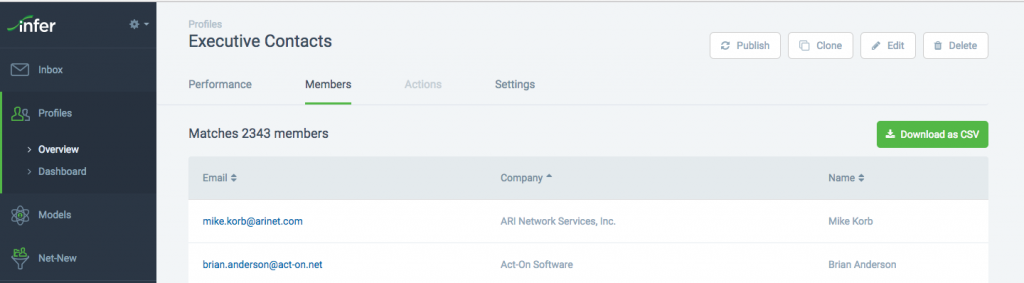
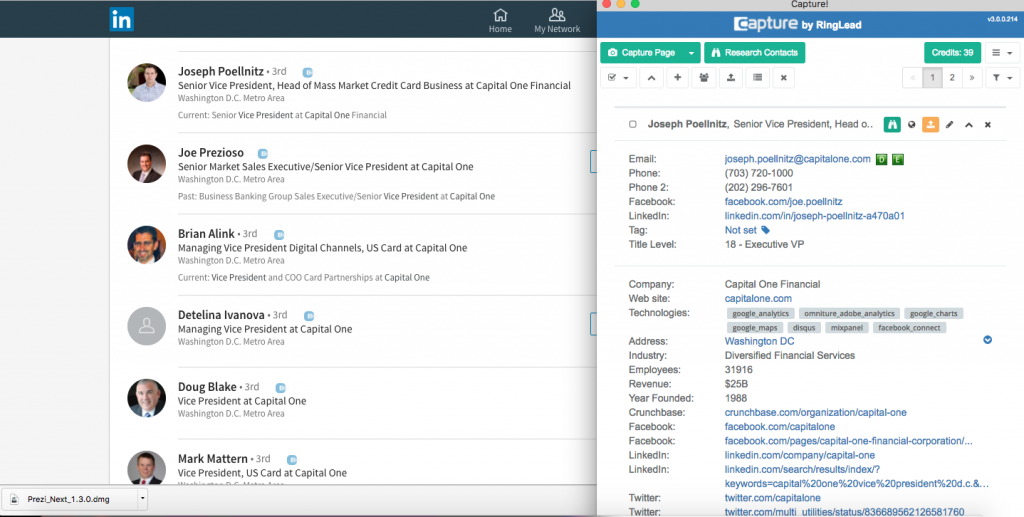
Pick 4 reps and give them 25 accounts apiece. Get RingLead Capture for each of them, using a free trial + 1 month basic subscription to get each rep 4 leads with full contact info from their 25 accounts. Total cost: $80.
For B2B teams with a sizable budget, I recommend LeadGenius as an all-in-one tool for customer and prospect data enrichment, plus machine learning-generated new account lists.
Step 3. Start Performing Predictive Outreach
Recommended Tools: Crystal, Gong.io,
Let’s say you get the 100 new target accounts. Let’s put predictive to the test with call and email outreach.
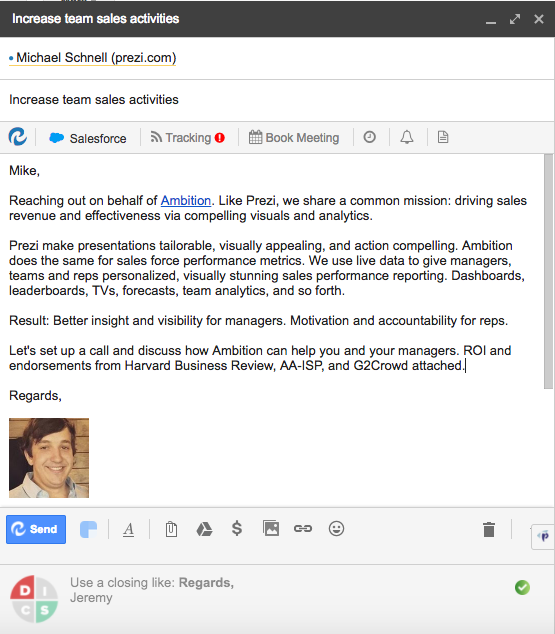
Pay $160 for 4 one-month Crystal Knows accounts. Then, using Crystal’s DISC analysis, begin writing predictive outbound emails tailored to each prospect’s personality and preferred communication style.
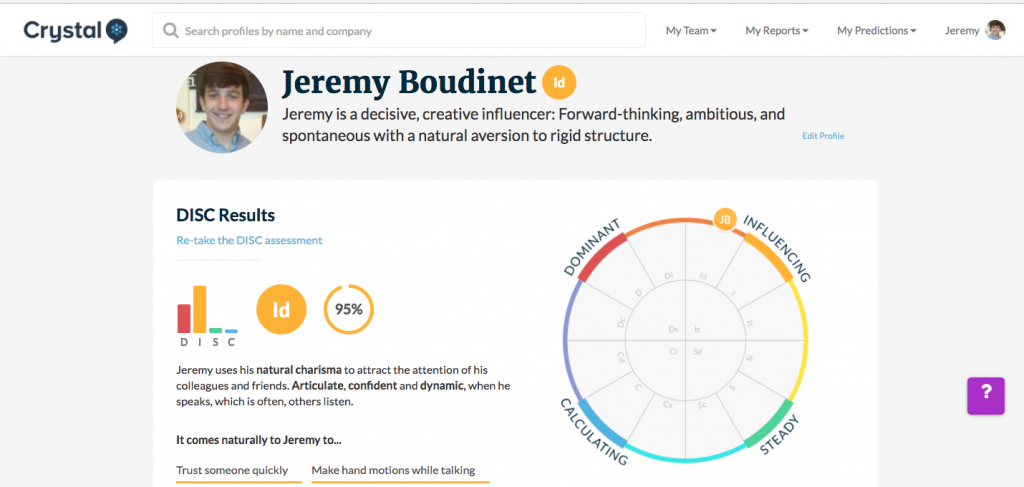
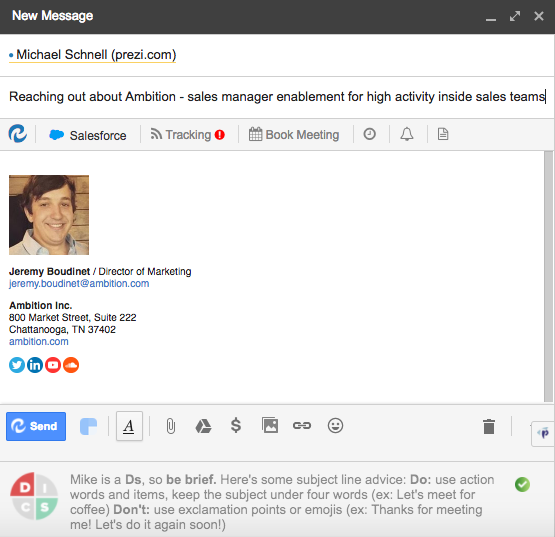
The craziest thing about Crystal – it integrated with LinkedIn and Gmail, which means it can tell you how to compose your email to a particular person mid-draft, using predictive analytics based on data from their previous online conversations. Staggering, yet true.
Crystal is the real deal. I’m not sure how, but they have managed to acquire communication data analytics on an insane number of people. My father, my brother and my girlfriend all had full profiles about them that were scarily accurate.
From there, get predictive with your follow-up calls. If you make calls via Zoom, GoToMeeting, WebEx, SalesLoft or Join.me, you can trial Gong.io.
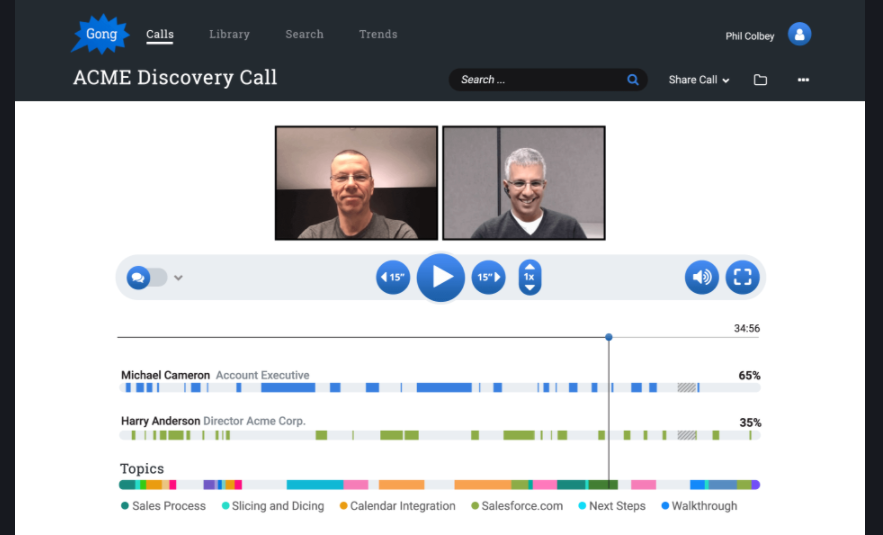
As the image suggests, Gong.io is call recording analysis that tracks and analyzes success rates, engagement levels, messaging, and even the volume and lilt of your voice on each cold call. Using those data points, it then predicts the success rates and critiques your future outbound calls.

Step 4: Stay Predictive Throughout the Pipeline
Tools: Prezi, SalesWings, Ambition
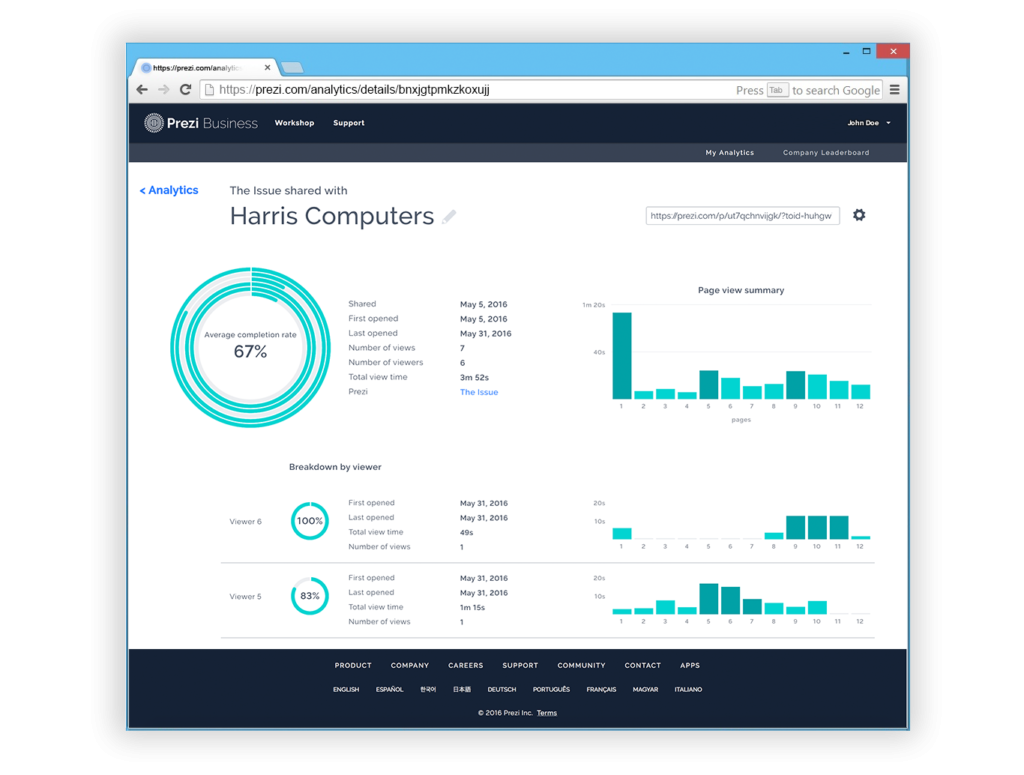
To stay predictive throughout the rest of your pipeline, Use Prezi to track, analyze and predict presentation effectiveness throughout the sales process. The business version’s analytics suite includes predictive analytics based on prospect engagement and interaction with each presentation.
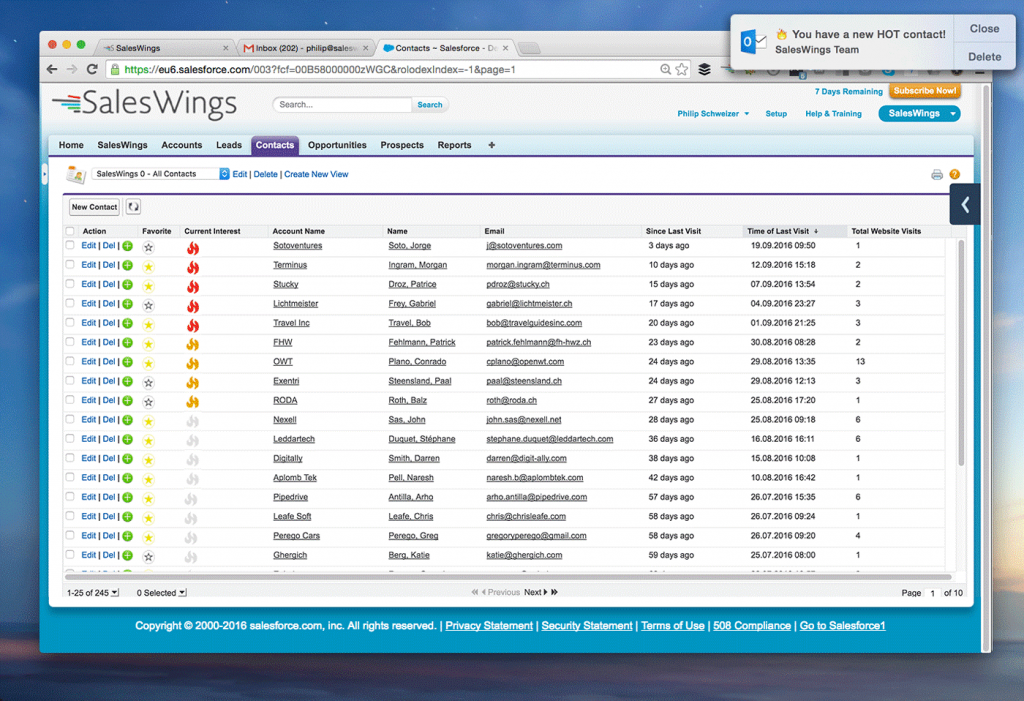
Use Pipedrive or Salesforce? SalesWings is a fully automated add-on for predictive lead scoring which identifies your most sales-ready leads based on their website activity. It analyses past and future visits of your leads and will score their level of engagement/interest. It automatically notifies the sales team about a lead’s interest, acting as an opportunity radar.
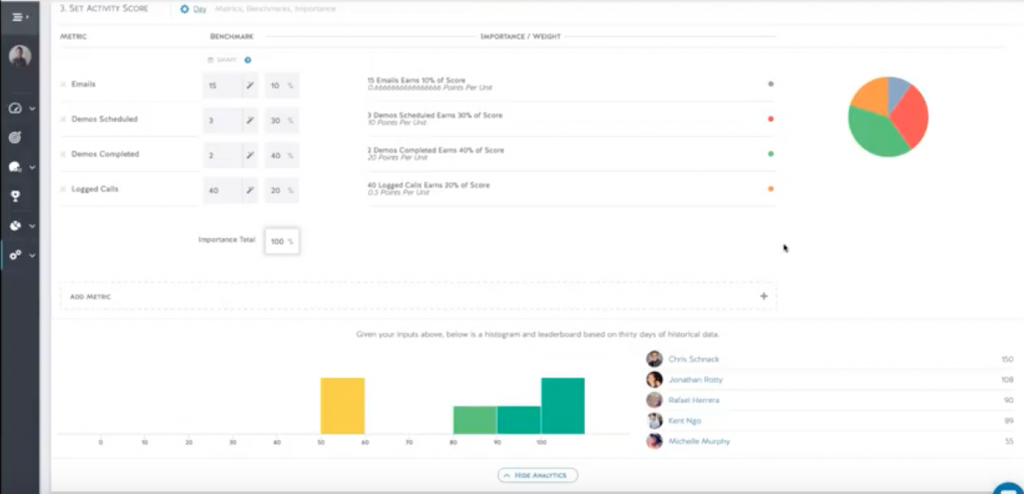
Finally, managers can bring predictive into their sales team’s performance analytics using Ambition, which syncs to your data sources, machine learns each rep’s performance history, then generates recommended performance benchmarks for managers and forecasts future earnings for each rep.

Beyond the Hype: Bringing Predictive to B2B Sales and Marketing
We hope that this post illustrates just how easy, cost-effective, and useful predictive has become in 2017. For more great insights into predictive trends and tools, check out the 2017 B2B Trends and Tech Guide.
Good luck to your sales organization in its 2017 campaign. And remember that predictive, machine-learning, and AI is all about one thing – ensuring your team repeats past successes and avoid past failures.
Frequently Asked Questions
- How does predictive lead scoring actually work?
- Is machine learning better than manual scoring?
- When should predictive B2B sales start?
- Which prospecting tools fit this workflow best?
- Which data enrichment fields matter most?
- How do you validate predictive lead scoring quality?
- Can small teams run predictive B2B sales?
How does predictive lead scoring actually work?
Predictive lead scoring ranks leads by combining fit data and real buying signals so RevOps can prioritize accounts with the highest likelihood to convert.
This is where Lead Scoring Software becomes useful in the workflow.
In practice, the model looks at firmographic data, historical conversion patterns, and behavioral signals such as page visits, recency, frequency, and engagement depth. That makes it more useful than a static points-only model because it updates as buyer intent changes. For RevOps managers, the real win is operational consistency: sales, marketing, and pipeline reporting all work from the same prioritization logic.
Tip: document which signals indicate fit versus in-market intent before you automate routing.
Is machine learning better than manual scoring?
Machine learning is usually better for pattern detection, but manual scoring still matters when you need transparency, governance, and fast operational control.
A strong RevOps setup often uses both. Machine learning can spot combinations of behaviors and account traits that humans would miss, while rules-based scoring lets you enforce business logic such as ICP exclusions, territory constraints, or handoff thresholds. That hybrid approach is especially useful when sales wants to understand why a lead was prioritized. Helpful tip: keep one explanation layer for humans, even if the scoring engine behind it is more advanced.
Tip: See this guide on expanding your customer base for a practical reminder that tools work best when paired with disciplined execution.
When should predictive B2B sales start?
Predictive B2B sales should start once you have enough clean customer and engagement data to identify patterns worth repeating.
The article’s three-step flow is still the right operating sequence: enrich accounts first, use machine learning for target selection second, and activate predictive outreach third. Starting with outreach before your data foundation is stable usually creates noise, weak handoffs, and low trust in the model. RevOps should define the minimum viable dataset up front, including account attributes, CRM outcomes, and engagement history.
Tip: keep the first rollout narrow by testing one segment, one routing rule, and one outreach motion before scaling.
Which prospecting tools fit this workflow best?
The best prospecting tools are the ones that match your goals across data collection, enrichment, outreach, and sales follow-up without creating unnecessary handoff friction.
In the workflow described in the article, the stack needs to support four jobs: enrich accounts, identify likely targets, activate outreach, and feed response signals back into your CRM or scoring layer. RevOps managers should evaluate tools by data quality, integration depth, speed to activation, and how easily teams can verify outcomes inside their system of record. Helpful tip: map each tool to a single operational job before you buy.
Tip: this SalesWings prospecting tools guide is a useful framework for choosing a stack by goal and ROI.
Which data enrichment fields matter most?
Data enrichment matters most when it improves account fit, territory assignment, segmentation, and your ability to compare winners against non-converters.
For most RevOps teams, the highest-value fields are industry, employee count, geography, technology stack, account hierarchy, and role-level contact data. Internal fields matter too, especially contract value, product usage, sales cycle length, and expansion potential, because they help connect scoring to revenue outcomes rather than surface-level activity. The goal is not to append everything possible; it is to enrich the fields that improve decisions.
Tip: review enrichment coverage quarterly so stale or low-value fields do not clutter your model.
How do you validate predictive lead scoring quality?
Predictive lead scoring quality is validated by checking whether high-scoring leads consistently convert faster, create more pipeline, or close at higher rates.
RevOps should compare score bands against outcomes such as meeting booked rate, opportunity creation, win rate, and sales cycle length. It also helps to audit false positives and false negatives every month so the model does not drift toward vanity engagement. Validation is not only a data science task; it is an operating cadence shared with sales and marketing leaders.
Tip: publish a simple score-to-outcome dashboard so stakeholders can see whether the model is still earning trust.
Can small teams run predictive B2B sales?
Small teams can absolutely run predictive B2B sales if they focus on a limited dataset, one clear use case, and a lightweight testing plan.
You do not need a dedicated data science team to start. Most early wins come from combining clean CRM data, basic enrichment, behavioral signals, and a simple prioritization workflow inside existing sales and marketing systems. The mistake is trying to model every motion at once instead of proving value in one segment first.
Tip: begin with inbound prioritization or account selection, then expand into outreach optimization and pipeline forecasting once adoption is stable.
About the Author:

Jeremy Boudinet is the Director of Marketing at Ambition and Chapter President for AA-ISP.

We thought you might be interested in this article: